


 Back
Back 

For EU platform operators that pay creators, gig workers, or sellers, manually managing DAC7 reporting adds friction at every step.
Collecting payee data, validating tax IDs, tracking earnings across markets, and maintaining secure records leaves little room to focus on growth.
By contrast, automation makes compliance more accurate and far less burdensome for mid-market finance and platform teams.
In this guide, you’ll discover what triggers DAC7 reporting obligations, 6 steps to stay compliant as a platform operator, and one powerful tool to simplify the process.
Key Takeaways
- DAC7 reporting is part of the EU’s Directive on Administrative Cooperation 7 framework. It requires platforms to collect, verify, and report seller income.
- Seller location, platform activity, and cross-border operations can trigger DAC7 reporting obligations even if your company isn’t based in an EU country.
- Staying compliant involves collecting accurate seller data, automating validation and reporting, maintaining GDPR-aligned records, submitting on time, and monitoring updates.
- Tipalti automates data collection, validation, and reporting to make compliance faster, easier, and more secure as companies scale.
What Is DAC7 Reporting?
DAC7 reporting is a requirement under the EU’s Directive on Administrative Cooperation 7, aimed at improving tax transparency for digital platforms.
Its purpose is to help authorities more easily assess compliance with income tax and VAT in the digital economy.
DAC7 applies to platforms that facilitate specific commercial activities, including:
- Property or vehicle rentals
- Personal services
- Sale of goods
It also introduces a new annual system for the automatic exchange of information. Digital platforms must now collect, verify, and report detailed information about sellers to competent authorities in member states.
Non-compliance with this legal obligation can result in fines, account restrictions, or other local penalties.
For example, Maltese tax authorities can fine platform operators €2,500 for failing to document in the required manner and €5,000 for lack of due diligence.
Beyond legal risk, DAC7 compliance is essential for platform growth. Reporting information accurately:
- Reduces administrative errors.
- Protects your reputation with users.
- Ensures smooth expansion across EU markets.
Note: The proposed DAC8 will expand digital platform reporting obligations, particularly around new forms of cross-border digital transactions. Monitor updates to ensure readiness.
How DAC7 Reporting Works in Practice
Consider a small EU-based marketplace that connects freelance tutors with students across multiple countries.
To meet DAC7 obligations, the platform must collect each tutor’s tax ID and bank details, verify the information, and submit it to the relevant tax authority.
Here’s a simplified version of how DAC7 annual reports work:
| DAC7 Reporting Step | How Platforms Stay Compliant |
|---|---|
| Data collection | Gather seller IDs, tax identification numbers (TINs), VAT numbers, bank details, and addresses. For individuals, include date of birth. |
| Verification | Cross-check tax IDs and seller information against EU databases to reduce errors. |
| Submission to EU tax authorities | Generate compliant XML or CSV files for submission to a chosen member state. |
| Record retention | Store due diligence and reporting records for 5–10 years, as required by national regulations. |
| Ongoing updates | Refresh seller information annually or whenever changes occur. |
| GDPR compliance | Handle sensitive data securely, provide clear privacy notices, and collect seller consent where required. |
Following this structured process ensures that you meet DAC7 regulations and reporting deadlines accurately to minimise the risk of fines.
Who Does DAC7 Affect?
DAC7 applies to platforms that facilitate specific economic activities within the European Union.
Understanding which businesses and activities fall under the directive is essential to avoid penalties, reduce operational risk, and maintain trust with sellers and providers.
Types of Platforms DAC7 Affects
DAC7 primarily targets digital platforms that act as intermediaries between sellers and buyers.
Often, these involve mass payouts to multiple sellers, creators, or freelancers.
For example:
- Marketplaces. Online platforms connecting sellers of goods or services with customers across EU member states.
- Gig platforms. Apps or websites that offer freelance work, ride-hailing, delivery services, tutoring, or other personal services.
- App-based intermediaries. Platforms that enable transactions for services or rentals via mobile or web applications.
Platforms that solely process payments but don’t facilitate activities (e.g., payment processors) are generally excluded—these are covered under “DAC7 Exclusions” below.
Types of Relevant Activities DAC7 Affects
DAC7 reporting obligations depend on the activities your platform supports, not just the type of platform.
Reportable activities include:
| DAC7 Reportable Activity | What This Looks Like |
|---|---|
| Sales of goods | Transactions where the platform facilitates the sale of products between sellers and buyers. |
| Rental of immovable property | Short-term accommodations, parking spaces, or other property leases for permanent establishments. |
| Personal services | Freelance work, ride-hailing, delivery, tutoring, or similar services. |
| Vehicle rentals | Any mode of transport rented via the platform. |
By identifying the specific activities your platform facilitates, you can determine the scope of DAC7 obligations.
DAC7 Exclusions
Some platforms and sellers aren’t required to report under the DAC7 directive.
Key exclusions include:
- Payment processors. Platforms that only handle transactions without facilitating the underlying activity.
- Listing-only sites. Websites that simply advertise services or redirect users without handling payments.
- Certain high-volume providers. Large providers of property rentals (e.g., more than 2,000 rentals per property per year) or other sellers meeting thresholds set in local legislation.
- Government entities. Public bodies and authorities are generally exempt.
- Listed companies. Entities trading on a regulated EU market.
- Small sellers. Individuals or entities with fewer than 30 transactions and a total amount below €2,000 in a reportable period.
Understanding these exclusions helps you focus your reporting efforts where required, minimising unnecessary admin.
Automate DAC7 Reporting with Secure, Scalable Compliance
Tipalti helps finance teams automate seller data collection, validation, reporting, and submission on a single platform to stay DAC7 compliant.
What Triggers a DAC7 Reporting Obligation?
Your platform’s activities, the location of sellers or assets, non-EU headquarters, or multi-country operations all trigger DAC7 reporting obligations.
Understanding each scenario ensures you meet reporting duties and avoid penalties, keeping sellers and operations compliant at the same time.
While related, here are four crucial distinctions worth considering.
Your EU-Based Platform Facilitates a Reportable Activity
Reporting obligations arise whenever your EU-based platform enables one of the activities outlined under DAC7 (e.g., property rentals or the sale of goods).
By capturing and validating seller data for these activities, you’ll meet legal requirements and avoid fines.
Example: A peer-to-peer car rental platform must report owner earnings to the relevant tax authority because it handles vehicle rentals.
You Have EU-Based Sellers or Assets
Your platform must report whenever any seller, asset, or service is physically located in the EU, regardless of the location of your headquarters.
The location triggers DAC7 obligations. Failing to report EU-resident sellers or assets can result in fines, penalties, or reputational damage.
Example: A UK-based short-term rental platform with properties and hosts in Spain must collect and report the hosts’ earnings to Spanish tax authorities.
You’re a Non-EU Platform Facilitating EU Activities
Even if your platform is headquartered internationally, DAC7 applies when you facilitate reportable activities within the European Union.
If you’re a non-EU platform, you must register in the member state you operate in and submit reports there (regardless of where sellers are located).
Registration and reporting ensure compliance with EU tax law and reduce the risk of fines.
Example: A US-based ride-hailing platform operating in France must register and report drivers’ earnings to the relevant tax authority.
You Span Across Multiple Countries
When your platform has sellers, users, or assets in multiple EU member states, you may need to report in a single “home” member state to avoid double reporting or penalties.
DAC7 requires a centralised reporting point for cross-border activities.
Correctly identifying your home member state ensures you meet obligations without duplicating submissions.
Example: An e-commerce marketplace with sellers in France, Italy, and Spain must determine its reporting member state and submit combined data for all sellers to avoid multiple filings.
6 Steps to Ensure DAC7 Compliance as a Reporting Platform Operator
Breaking down DAC7 reporting into a clear, step-by-step approach helps you manage obligations efficiently and reduce risk.
Follow this structured process to capture the right data, validate it correctly, and report on time—all while keeping sellers informed and ensuring compliant operations.
Step 1) Identify Whether Your Platform Falls Under DAC7 Scope
Confirm whether DAC7 applies to your platform (e.g., due to seller location or cross-border operations) to prevent under- or over-reporting.
This analysis also helps your company avoid fines, penalties, or operational inefficiencies.
Say a UK-based software platform facilitates European game sales.
It must determine if it falls under DAC7 reporting for each seller and product category, so that it can register and report in the correct member state.
Here’s how to determine your platform’s scope:
- Map all platform activities against DAC7 reportable categories (e.g., property rentals, personal services, sales of goods, vehicle rentals).
- Identify the location of your sellers, assets, and any cross-border operations.
- Confirm whether your platform is EU-based or non-EU, and note any jurisdiction that may require reporting.
- Consult tax or legal advisors to interpret your obligations correctly (as DAC7 rules can vary slightly by member state).
- Check for exemptions or thresholds to avoid unnecessary reporting—certain high-volume providers or low-activity sellers may be excluded.
Keeping a record of how you determined whether DAC7 applies is particularly useful for audits and internal reviews.
Step 2) Collect and Verify Seller Information Accurately
Gather and verify key data (such as tax IDs, VAT numbers, bank account details, and addresses) to ensure correct and complete reporting.
Platforms often have hundreds or thousands of payees. Collecting accurate information at scale is essential for both DAC7 compliance and smooth mass payouts.
In addition to avoiding penalties and delayed filings, it also improves the seller experience by reducing follow-ups and confusion.
Core report data you must collect under DAC7 includes:
- Seller identification (e.g., name, address, and legal status).
- Tax residence identifiers (e.g., TINs, VAT numbers, business registration numbers, or equivalent).
- Bank account details for payments.
- Details of reportable activities (e.g., sales, rentals, services, etc.).
- Jurisdiction of the seller or asset.
- Any applicable exemptions, exclusions documentation, or additional information.
For instance, a German-based online marketplace onboarding new craft sellers may require each artisan to submit a valid VAT ID and bank account.
The platform can then verify these details against EU tax records before including each in its DAC7 report.
Follow these steps to gather information correctly the first time:
| Data Collection and Verification Step | What to Do |
|---|---|
| Collect all required data | Include names, addresses, tax identifiers, VAT IDs (if applicable), bank details, and entity type. |
| Verify information | Cross-check TINs and VAT IDs against EU databases where possible. Flag discrepancies for correction. |
| Use consistent formats | Standardise data for easy reporting and integration with compliance tools. |
| Communicate with sellers | Provide clear instructions and deadlines for submitting required information. |
| Document all collection steps | Keep a record of data received and verification actions for audit readiness. |
Accurately collecting and verifying seller data reduces follow-ups and streamlines ongoing reporting across borders.
Step 3) Implement Automated Data Validation and Reporting
By validating seller data and generating reports automatically, you’ll reduce errors, save time, and meet deadlines.
Compared to manual processes, automation improves accuracy while freeing up internal resources for higher-value tasks.
For example, a Netherlands-based digital art marketplace may automatically validate new artists’ VAT IDs as they onboard.
The platform then adds this detail to DAC7 reports with a single click, reducing manual errors and administrative workload.
Here’s how to automate crucial parts of your DAC7 reporting:
| How to Automate DAC7 Reporting | What to Do |
|---|---|
| Use automated validation tools | Check TINs, VAT numbers, and banking information in real time against EU databases. |
| Generate compliant reports automatically | Export XML/CSV files ready for submission to EU tax authorities. |
| Schedule regular updates | Automate annual or ad hoc refreshes to keep seller data up to date |
| Integrate with existing systems | Ensure your ERP or payment platform feeds directly into the DAC7 reporting workflow. |
| Monitor for discrepancies | Flag and resolve mismatches before submission to avoid fines. |
Automation ensures accurate and timely reporting while freeing your team to focus on platform growth and cross-border operations.
Step 4) Maintain GDPR Compliance and Data Security
Ensure all data collection, storage, and processing meet GDPR requirements while supporting reporting obligations.
Both DAC7 and GDPR require the accurate and secure handling of seller information.
Mishandling personal or financial data can lead to reputational damage and enormous financial consequences. Even less severe infringements can result in fines of up to €10 million or 2% of global annual revenue.
Say you already encrypt and securely store seller bank details and VAT IDs. You also log every verification step and send clear consent forms to sellers.
This approach protects your platform against GDPR violations while ensuring accurate DAC7 reporting.
Here’s how to maintain data security:
- Encrypt sensitive data both at rest and in transit.
- Maintain audit trails showing when and how you collected, verified, and accessed seller information.
- Provide clear privacy notices and obtain consent for processing personal data.
- Use role-based permissions to restrict access to authorised staff.
- Regularly review processes and update security measures to align with EU and local regulations.
A robust data security approach reduces the risk of regulatory penalties, ensures GDPR alignment, and builds trust with both sellers and tax authorities.
Step 5) Submit Timely Reports and Retain Records
Submitting DAC7 reports on time and maintaining accurate records avoids penalties and ensures audit readiness.
In fact, platforms must adhere to member state deadlines and maintain due diligence documentation for 5–10 years.
While late or incomplete reporting triggers fines and account restrictions, proper record retention supports internal reviews and regulatory audits.
Achieving this includes the following tasks:
| DAC7 Reporting Task | Description |
|---|---|
| Generate your DAC7 report | Create XML or CSV files covering all sellers. |
| Submit before the first reporting deadline | Upload before your EU member state deadline—often, due diligence by Dec 31, reports by Jan 31 for the previous calendar year. |
| Retain records | Securely store reportable seller data, verification steps, and submission confirmations for 5–10 years (depending on local rules). |
| Reduce mistakes | Implement automated reminders and validation checks to minimise human error. |
Timely reporting and structured record retention reduce the risk of fines, streamline audits, and provide transparency across platform operations.
Step 6) Monitor Updates Across EU Member States
Staying informed about requirements and local variations ensures ongoing compliance and avoids penalties.
Regulations and technical standards are subject to annual changes. Platforms that don’t adapt risk incorrect reporting, fines, and reputational damage.
For example, Spain’s Royal Decree 117/2024 transposed DAC7 into local law, tightening due diligence and reporting rules for property rentals.
By updating your templates and internal workflows to include Spanish sellers’ data and rental-activity details, you’ll avoid potential penalties.
Here are some simple tips to stay ahead of evolving regulations:
- Subscribe to updates from official EU and national tax authorities (e.g., the European Commission).
- Engage tax, legal, or compliance advisors to interpret new requirements.
- Track changes to reporting templates, deadlines, and seller data protection obligations.
- Integrate monitoring into internal compliance workflows.
Continuous monitoring ensures that you maintain compliance across jurisdictions, adapt to regulatory changes, and avoid the consequences of incorrect reporting.
However, even well-organised teams can run into scaling issues when seller volumes or cross-border payouts increase.
Automating onboarding, validation, and submission is the most reliable way to stay accurate (and avoid fines) as you grow.
Case Study: Thematic Automates Artist Payouts with Tipalti Mass Payments
Tipalti streamlined onboarding, tax collection, and payouts for Thematic’s 625,000+ creators across 200 countries.
By freeing up 3 team members’ workloads, the music royalties platform paid artists faster via their preferred methods, built trust, and increased satisfaction.
How Tipalti Supports Ongoing DAC7 Compliance
Tipalti’s powerful software turns DAC7 reporting from a complex regulatory burden into a smooth, automated workflow.
Here’s how it helps your finance teams stay accurate, efficient, and audit-ready across EU operations.
Streamline Mass Payouts for External Payees
Tipalti Mass Payments automatically collects tax forms, validates regulatory details, and handles reporting for all payees, reducing errors and ensuring compliance.
You’ll often face complex VAT and tax obligations when paying thousands of creators, affiliates, freelancers, or other partners.
Tipalti’s automated compliance features check financial information in real time, so you avoid errors even at scale:
The branded self-service portal even lets payees enter and update their own information, saving finance teams time.
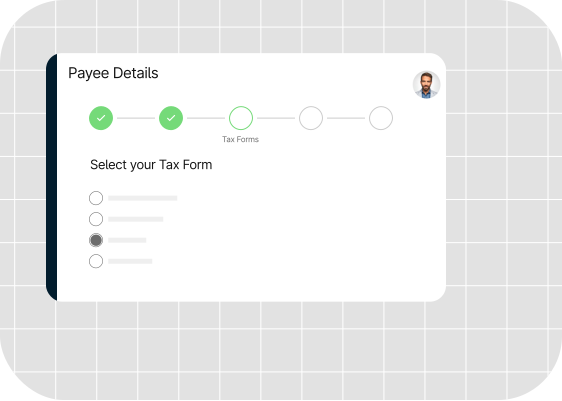
Tipalti reduces the risk of non-compliant mass payments and ensures accurate reporting under DAC7 and other regional rules.
Outcome: Accurate mass payouts that keep payees satisfied and reduce regulatory risk.
Ensure Accurate Reporting with Built-In Validation
Tipalti cross-checks tax IDs, VAT numbers, and banking information in real time. That way, you know everything is correct before reporting.
For instance, the VAT Information Exchange System (VIES) integration validates VAT numbers across the EU during self-onboarding.
Tipalti Detect also flags missing or inconsistent data:
Now, your team instantly sees which records need review without having to search through spreadsheets.

Outcome: Higher data accuracy, reduced risk of fines, and simplified multi-jurisdiction reporting.
Create DAC7 Files in a Few Clicks
Tipalti generates XML/CSV files for EU tax authorities with just a few clicks.
Note: Confirm with your tax authority or Tipalti which technical schema your member state requires.
Your finance team can merge data across multiple sellers and entities, ready for submission without manual formatting or copying.
Simply ask Tipalti’s AI Report Builder questions and generate custom reports in seconds:
With Tipalti, you can handle cross-border reports for both UK DRR and EU DAC7 in one place.

Outcome: Simple, timely DAC7 submissions without manual file-building or last-minute corrections.
Stay Audit-Ready While Meeting GDPR Laws
Tipalti keeps all DAC7 data secure and organised with built-in audit trails.
The system logs every collection, verification, and submission step. GDPR-aligned consent workflows and user permissions then ensure your platform handles seller data correctly:
Instead of last-minute panicking, your team can show auditors a clear, compliant record of all submissions.
Outcome: Protects against compliance gaps, supports internal and external audits, and keeps GDPR obligations in check.
Handle Multi-Jurisdiction Compliance in One Place
Tipalti centralises DAC7 reporting across multiple EU member states, so your finance team can see and control all seller data and submissions.
Register in a single home state, but manage reporting for sellers and activities across the EU:
Automated alerts also notify you when regulatory rules change in different local authorities.

Outcome: Streamlined compliance across the EU, with fewer errors and no duplicate submissions.
Strengthen Governance with Centralised Controls
Tipalti brings all DAC7-related workflows, approvals, and reporting into a single, controlled environment.
Finance teams gain visibility across entities and regions, so they can track compliance status and identify risk early:
Get a clear view of governance across the business using approval chains, multi-entity management, and audit trails.
Outcome: Lower regulatory risk and more predictable reporting cycles that scale as your company grows.
In short, Tipalti unifies every aspect of DAC7 compliance, creating a streamlined, scalable, and fully controlled process for your organisation.
DAC7 Reporting FAQs
Does DAC7 apply in the UK?
The DAC7 is an EU directive. However, the UK has introduced its own version to ensure taxpayer compliance: the UK Model Reporting Rules for Digital Platforms (DRR).
Say your platform has sellers or service providers based in the EU. You’re still required to meet DAC7 obligations for those participants—even if your headquarters are in the UK.
Most global platforms ultimately need to comply with both frameworks, as both are based on the OECD’s Model Reporting Rules for Digital Platforms.
How long must platforms retain seller records?
DAC7 is the seventh amendment to the original Council Directive 2011/16/EU on administrative cooperation in the field of taxation.
Under this, digital platform operators generally need to keep due diligence procedures and seller data for 5–10 years (depending on national legislation).
What if a seller refuses to provide the required information?
Say a seller fails to provide DAC7 data despite reminders. Many EU member states’ laws permit platforms to withhold payments or even deactivate accounts.
As DAC7 compliance relies on verified data, non-cooperative sellers can pose a compliance risk. Handling them proactively is essential.
How does DAC7 interact with GDPR?
As DAC7 requires the collection and storage of personal data (e.g., tax IDs, bank details), platforms must handle this in line with GDPR principles.
For example, you must:
• Collect only the data DAC7 requires.
• Store it securely with clear access controls.
• Be transparent with sellers about how you use their data.
• Retain it only for the DAC7-required period.
What are the penalties for non-compliance?
DAC7 penalties vary by EU member state, but they typically include:
• Fines for inaccurate, incomplete, or late reporting.
• Penalties for failing to complete due diligence on sellers.
• Additional sanctions if a platform repeatedly submits incorrect data.
For high-volume platforms, even a small percentage of non-compliant sellers can create significant regulatory exposure.
Therefore, automated collection, verification, and audit trails are becoming the default approach.
Simplify DAC7 Reporting With Tipalti and Focus on Growth
DAC7 has raised expectations for how digital platforms collect, verify, and report seller information across the EU.
Finance teams now face higher accuracy standards and tighter deadlines—making slow manual processes error-prone and risky.
By using powerful software that automates seller data collection, tax checks, and record retention, the entire DAC7 reporting process becomes faster and more accurate.
Learn how Tipalti’s automated tax compliance solutions help you reduce risk and stay ahead of EU reporting requirements.