


 Back
Back 

Europe is moving into a significant phase of its transition to electronic invoicing (e-invoicing).
What began as a public-sector obligation in many EU states (known as B2G e-invoicing) has evolved into a continent-wide push for more digital tax compliance in B2B transactions.
It means e-invoicing will soon become a regulatory requirement in more parts of the EU, affecting how a greater number of finance teams issue and process invoices.
This guide explains the key e-invoicing requirements in the EU and outlines how automation helps companies comply with expanding mandates.
Key Takeaways
- E-invoicing is the structured, automated exchange of invoice data between businesses and tax authorities—created to make transactions more efficient and secure.
- E-invoicing rules are expanding fast across the EU, with most member states introducing B2B and B2G mandates between 2025 and 2030.
- ViDA (VAT in the Digital Age) aims to streamline reporting across Europe through a shared, real-time digital framework for tax and invoice data.
- Tipalti enables seamless compliance across jurisdictions with Peppol integration, automated validation, and secure archiving in one connected platform.
What Is E-Invoicing (and How Does It Differ from Digital Invoicing)?
E-invoicing, short for electronic invoicing, is a structured way of exchanging digital invoices between suppliers and buyers.
More than just swapping PDFs via email, it uses consistent, standardised formats as agreed by tax authorities (e.g., foundations set at the EU level, with local variations in each country).
These standardised e-invoices contain all the critical information that accounting, ERP, and tax systems need for automated processing—such as supplier names, VAT numbers, and line items.
Three technical pillars separate compliant e-invoicing from ordinary digital documents:
- Structured data formats. Invoices must adhere to agreed-upon layouts, including Universal Business Language (UBL) or Peppol BIS 3.0, both of which follow XML standards.
- Secure transmission networks. Invoices travel via approved channels. The Peppol network is Europe’s best-known, while some countries have proprietary systems, like the Netherlands’ Digipoort.
- Authenticity mechanisms. Digital signatures, timestamps, and electronic identifiers prevent tampering with invoice data as it moves between systems.
With cleaner data that systems can read, buyers, suppliers, and tax authorities move more efficiently.
In contrast, a digital invoice is just an electronic copy of an invoice, usually in PDF, Excel, or DOCX file format.
This file may contain the correct information, but presented differently, which makes automated invoice processing, archiving, and real-time reporting far harder.
The Current State of E-Invoicing Across the EU
While a European standard is in progress, e-invoicing requirements currently vary across jurisdictions.
Some countries have already established e-invoicing standards for specific types of transactions (e.g., most mandate e-invoicing for B2G transactions), while others are still developing their national frameworks.
Below is a summary of some of the largest nations’ milestones and plans:
| Country | Public Procurement (B2G) Status | B2B Timeline |
|---|---|---|
| Italy | Mandatory | Mandatory since 2019 |
| France | Mandatory | Phased rollout from 2026 |
| Germany | Mandatory | Receiving mandatory from 2025, issuance expected from 2027 |
| Poland | Mandatory | Mandatory from February 2026 |
| Belgium | Mandatory | Mandatory from January 2026 |
| Spain | Mandatory | Voluntary (national system available), phased rollout 2025–2026 |
| Greece | Mandatory | Phased rollout from 2026 |
| Netherlands | Mandatory | Voluntary (Digipoort available) |
Dates can change as central governments continue to finalise and announce technical rules. France has delayed its B2B e-invoicing mandates once already in 2023, for example.
Changes or not, most European companies will soon need the capability to issue and receive compliant invoices. Otherwise, B2B trade—especially cross-border—will become difficult or even impossible.
Automated compliance solutions such as Tipalti remove much of the risk and manual work, helping companies stay aligned with evolving rules in every relevant market.
Stay ahead of ViDA—without adding headcount
Tipalti automates invoice capture, validation, and cross-border reporting, helping EU finance teams stay compliant and efficient as ViDA rolls out.
The Legal and Technical Foundations of E-Invoicing Requirements
Various legal and technical frameworks aim to create a secure and interoperable invoicing system that EU companies can trust.
Together, they ensure that invoices moving between buyers, suppliers, and tax authorities are legally and technically compatible across the systems of member states.
Here are the main pillars shaping current and future e-invoicing regulations:
| Standard/Regulation | How It Affects E-Invoicing |
|---|---|
| Directive 2014/55/EU – Public Procurement (B2G e-invoicing) | Makes e-invoicing mandatory for public procurement across the EU. Its European Standard (EN 16931) structuring rules are the model for many B2B systems. |
| VAT Directive (2006/112/EC) | Sets the rules for keeping e-invoices authentic, readable, and securely stored—usually between 6 and 10 years for auditing, depending on the state. |
| eIDAS Regulation (EU 910/2014) | Gives e-invoices the same legal status as paper invoices by officially recognising electronic signatures, seals, and timestamps. |
| Peppol BIS 3.0 and UBL 2.1 Standards | Allow different invoicing solutions to communicate effectively by using a shared markup language (i.e., XML). |
The next development after those in the table above is VAT in the Digital Age (ViDA). The reform proposes to extend e-invoicing beyond public procurement to cross-border B2B trade and introduce near real-time VAT reporting.
ViDA: The Future Framework for E-Invoicing and Digital Reporting
The ViDA package is a proposed overhaul of the EU’s value-added tax system.
The idea behind it is to simplify VAT reporting and collection by businesses, suppliers, and authorities across Europe.
The initiative’s modernisation efforts cover three areas, starting with e-invoicing and reporting:
1) E-Invoicing and Digital Reporting
As of April 2025, EU countries can mandate e-invoicing for domestic transactions, and by July 2030, it will become standard for all intra-community B2B and B2G sales.
Companies will need to issue e-invoices within 10 days of a transaction and send the data to tax authorities almost instantly, eliminating the need for periodic VAT reporting.
2) Platform Economy
From July 2028, online providers of short-term accommodation (e.g., Airbnb) and passenger transport (e.g., Uber) will generally be responsible for collecting and remitting VAT, rather than the individual hosts and drivers who use their platforms.
3) Single VAT Registration
From January 2027, the One Stop Shop (OSS) scheme—built to simplify tax reporting and collection for cross-border B2C transactions—will expand to include energy supplies, installation contracts, and some domestic transactions.
From July 2028, companies moving their own goods between EU member states will also be able to report them through the OSS instead of registering for VAT in each country.
EU E-Invoicing Readiness Checklist (Under ViDA)
Use this quick self-check to see how ready your organisation is for ViDA’s rollout.
□ 2025: Have you reviewed local mandates and confirmed whether your ERP or AP systems support structured XML/UBL formats?
□ 2027: Will your systems be ready to integrate with the expanded OSS scheme and handle multi-country VAT reporting?
□ 2028: Are your digital platforms prepared for “deemed supplier” VAT responsibilities? (applicable to many online providers of accommodation and transport services)
□ 2030: Do you have a plan to issue and store standardised e-invoices for all intra-EU B2B and B2G transactions, with near-real-time reporting possible?
Reasons to Act: How ViDA Affects E-Invoicing Requirements
Through ViDA, the European Commission is pushing e-invoicing from optional to obligatory. This means a new shared digital reporting model will replace the current fragmented national systems.
As the transition happens, businesses operating in multiple member states will need to upgrade their ERP systems, connect to networks such as Peppol, and automate data validation to stay both efficient and compliant.
According to SSON’s 2025 State of Accounts Payable report, 76% of organisations already receive e-invoices, but only 10% feel “very equipped” to meet new compliance mandates (such as ViDA).
The readiness gap highlighted by SSON shows why early preparation—and the right technology—are so necessary.
How to Prepare for Mandatory E-Invoicing Requirements in 6 Simple Steps
The sooner you are ready for new e-invoicing and reporting requirements, the less disruption your business will face when they come into force.
Here is a clear, practical process to help you assess and strengthen your capabilities in time.
1) Map Your Invoicing Footprint Across EU Member States
List every country where you issue or receive invoices and note each one’s requirements.
Building a timeline that is specific to your operations will help you understand which mandates affect your business first and where to focus your compliance efforts.
2) Review Your ERP and AP System Capabilities
Check that your current software supports XML, UBL, or Peppol BIS formats and can integrate with e-reporting systems.
If not, now is the time to plan upgrades or integrations. Switching too close to a deadline does not leave room for transferring data and adapting to a new interface, and could panic your team.
Note: Tipalti already includes built-in e-invoicing features that support these standards, reducing the need for manual system upgrades later.
3) Connect to a Recognised Transmission Network
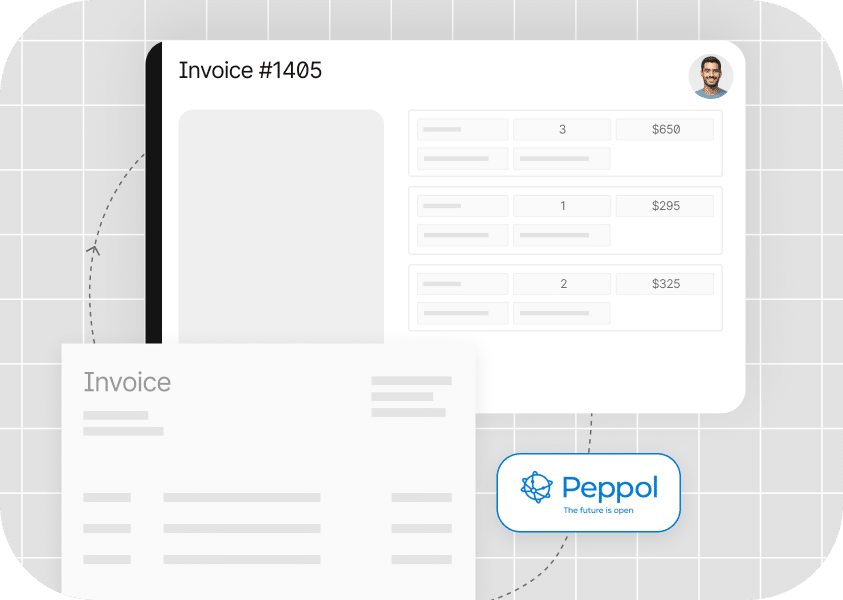
Register with a certified e-invoicing service provider or connect to a trusted network such as Peppol, which enables secure, standardised data exchange across borders.
Tipalti processes each invoice according to Peppol’s standards, and automatically checks every detail for compliance:
By routing invoices through trusted gateways, businesses can safely exchange data with suppliers and tax authorities while meeting strict validation rules.
4) Automate VAT ID and Company Identifier Validation
Automate VAT ID and company checks to prevent errors and rejected invoices, keeping your company compliant and your team productive.
SSON found that 60% of organisations experienced higher fraud risks in AP, but automation and AI-driven validation have dramatically reduced those risks.
Look for e-invoicing solutions that cross-verify supplier details with VIES (the EU’s VAT Information Exchange System) to flag mismatches automatically. That way, every invoice should pass tax authority verification the first time, saving your team duplicate work.
5) Strengthen Digital Record-Keeping and Archiving
Review your invoice storage policies to ensure compliance with EU and national archiving rules, depending on your trading location. Most states require the retention of records for 6 to 10 years.
Utilize automation to store invoices in structured formats (e.g., XML and readable PDFs) that remain readable, traceable, and easily retrievable during audits.
6) Monitor National Implementation Updates
Each member state has its own e-invoicing rollout timeline and technical rules, all of which are subject to change.
Monitor updates from member states’ tax authorities and the European Commission more generally, so you know what to prioritise and that your systems stay compliant as ViDA phases in.
Alongside your local government outlets, official sources to bookmark include:
- The European Commission’s eInvoicing Hub
- The Taxation and Customs Union
- The Building Blocks Bulletin (email newsletter)
Common Challenges in Preparing for E-Invoicing Compliance
Even having a clear roadmap will not solve every compliance issue. Most finance teams still face obstacles when trying to align their systems and processes with new e-invoicing mandates.
Here are some of the biggest challenges to overcome, and some information on how Tipalti’s invoicing tools can help.
Challenge 1: Fragmented Invoicing Systems
Many organisations still use a mix of local or legacy tools that don’t communicate well across borders. This makes data inconsistent and increases the risk of human error as staff manually copy records across.
Tipalti helps by: providing a unified platform that connects every entity and supplier, ensuring consistency across jurisdictions and simplified reporting.
Challenge 2: Complex National Variations
Each member state interprets ViDA and e-invoicing requirements differently, including how they structure data fields and the transmission networks they use.
Tipalti helps by: supporting standard formats like UBL and Peppol BIS, automatically adapting invoice structures to match each country’s rules and systems.
Challenge 3: Manual Data Validation and High Error Risk
Manual data entry and VAT checks leave room for errors that can result in rejected invoices or complications during audits.
Tipalti helps by: using Invoice Capture Agent and built-in VAT ID validation to ensure accuracy before invoices reach tax authorities.
Challenge 4: Archiving and Audit Readiness
Different archiving periods and authenticity rules across the EU can make record-keeping obligations confusing and difficult to manage.
Tipalti helps by: storing structured XML data alongside readable formats for up to 10 years—fully compliant and audit-ready.
With all these steps and challenges in mind, it’s clear that basic, traditional accounting software wasn’t built for the legal and technical nuances of inter-community trade in the EU.
Ensuring Compliance Across Jurisdictions with Tipalti
As mandatory e-invoicing approaches, it is more important than ever to have a smart, secure accounting tool that automates admin and communicates with the relevant reporting systems.
Tipalti’s accounts payable automation platform handles these cross-border complexities through integrated e-invoicing capabilities that work seamlessly across jurisdictions—including payments in multiple currencies:

By using Tipalti’s solutions, finance teams all over Europe already benefit from:
- Peppol-compliant invoicing. The system creates and receives UBL invoices that meet the European standard. Suppliers can transmit them through the Peppol network or upload them directly, and Tipalti’s AI Smart Scan will capture structured data without manual entry.
- Real-time VAT ID validation. The platform connects to government verification services to confirm tax identifiers and company data before processing payments. Integration eliminates manual checking and reduces errors that lead to costly compliance issues.
- Seamless ERP integration. Invoice data syncs automatically across your financial systems, supporting real-time reconciliation and eliminating duplicate data entry. When tax authorities request records, the structured data will be accurate and accessible.
- Secure digital archiving. The system stores both structured XML data and readable formats, supporting retention periods of up to 10 years. This automatic organisation keeps records accessible for audits while meeting EU archiving regulations.
These features work across borders without needing separate configurations for each country.
Effortless centralisation was a significant selling point for online wine marketplace Vivino, which uses Tipalti’s AP automation to manage payments and tax compliance across its more than 13 global subsidiaries.
Here is an example of what those global payments can look like in the system:
By controlling global invoice approvals, payments, and vendor management from a single system, Vivino has reduced manual AP work, minimised payment risk, and shortened close timelines.
Now, despite transaction volumes continuing to grow, the Vivino team can focus on strategy and increasing efficiency even further.
We’ve been able to skill up. There’s way less time being spent on AP. It has freed up time to be smarter about treasury and currency, and it has also enabled us to close faster because we’re not scrambling to get invoices submitted. [With Tipalti], everything is pretty seamless.
Rebecca Simmons, Global Corporate Controller, Vivino
Where E-Invoicing Goes From Here
Europe’s transition to mandatory e-invoicing will permanently change how businesses exchange financial data.
Expect more convergence in the coming months and years.
National systems will gradually align with ViDA’s framework. Real-time reporting will replace periodic filings. Paper invoices will become legally problematic, not just inefficient.
The finance teams that are already working with structured data, automated validation, and integrated ERP systems won’t need to panic when new mandates arrive. They will simply adjust configurations without rebuilding entire workflows.
Are you ready to future-proof your e-invoicing compliance? See how Tipalti’s Peppol e-invoicing solution reduces manual data entry, minimises errors, and boosts audit controls, helping you trade confidently across borders.