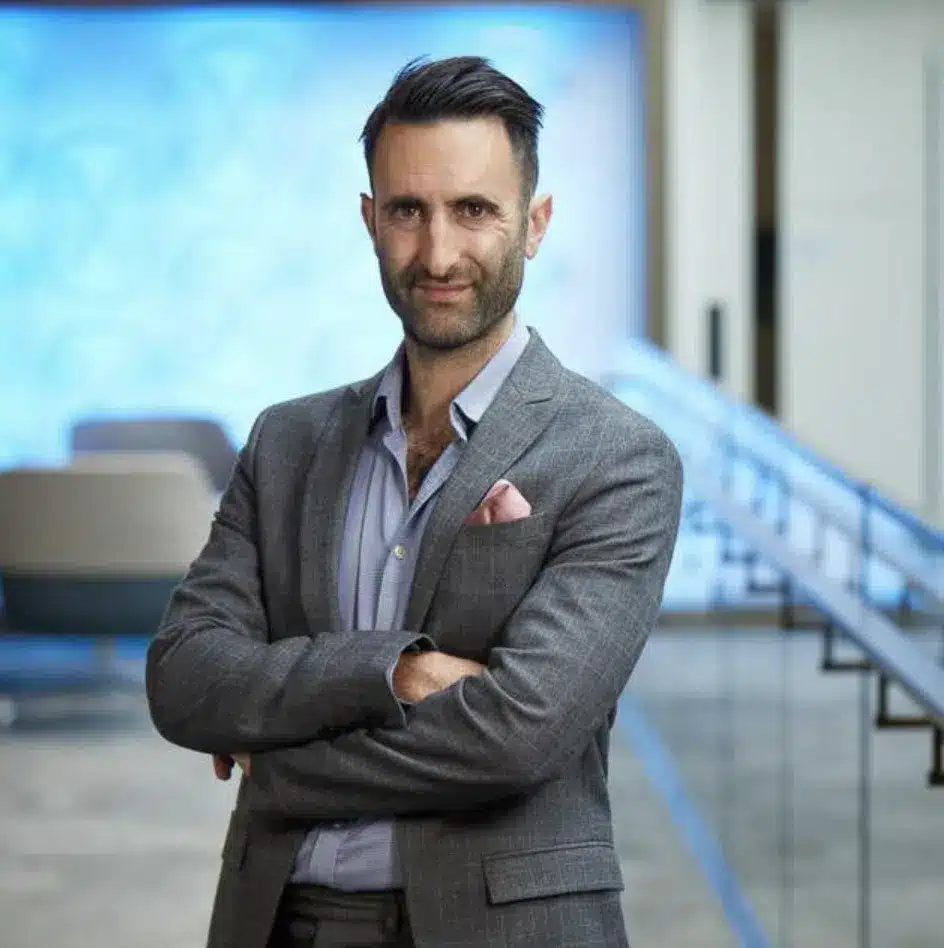

Lisa Vokes-Pierre’s natural aptitude for numbers and problem-solving led her to study economics at college, before embarking on a finance career focused on project management and operations. This included over a decade at UBS, where she held roles across the globe.
Five years ago, she stepped into a finance director role for the first time at a leading private family office.
A Career Built on Problem Solving
Nick Levine: To set the scene, what first made you interested in finance?
Lisa Vokes-Pierre: It was never a deliberate thing to get into finance. It just kind of happened. I thrive in it because I like numbers, problem-solving, streamlining, and understanding how things fit together, and pulling it together into something that makes sense. So, it gives me the sort of understanding of how business actually works.
Nick Levine: You studied economics at college before starting your career. Looking back, how did that degree help serve as a springboard for you?
Lisa Vokes-Pierre: I always liked math, and I knew that there was a lot of math in economics. With an economics degree, you have to start thinking logically, and you have to deliver under pressure. It also gives you a picture of how the world works and how one thing can impact another.
Broadening Horizons: From Savings Banks to UBS
Nick Levine: Could you walk me through the early chapters of your career and how you made the move from Iceland into international banking in London?
Lisa Vokes-Pierre: My first chapter in my early career was pre-, during-, and post-college, working at a local savings bank. I then went backpacking in Southeast Asia, came back, and thought I needed to do something more than this. I moved to London with nothing. I had no network or pre-defined job. I started temping, then got into cash management at a construction company called Bechtel, and that specialism got me through the door at UBS.
Nick Levine: At UBS, you worked on major global initiatives, including the rollout of the euro back in 1999. What was it like being part of a project of that magnitude early in your career?
Lisa Vokes-Pierre: I was completely new to project management and was young, in my early twenties. Everybody was on the same page. We didn’t know what was going to happen, but we knew we had to prepare as much as we could. I learned a lot about governance, structure, and controls. It was fun. Everybody worked until midnight, and the energy was memorable. I learned a lot about being part of a team. If you fail, everything fails.
International Mobility and Career Growth
Nick Levine: Over your 16 years at UBS, you transferred between London, the US, and eventually back to Europe. How did those international transitions come about?
Lisa Vokes-Pierre: One of the things I learned was: be bold, ask. You can only get a no. You need to be competent in what you’re doing, because otherwise the company isn’t going to spend its money on someone they don’t see loyalty or longevity in. When you’ve established yourself within an organization as someone competent, you can transfer locally or internationally.
Nick Levine: What advice would you give to professionals about seeking global experiences to elevate their careers?
Lisa Vokes-Pierre: If you’re curious about the world, about how other people work, and how culture works, you can gain so much out of it. Having international experience got me through the door at an international company here in Iceland when I came back after not having a career here. The network of both personal and professional connections is precious.
Stepping Into the Family Office
Nick Levine: After working in large-scale process development at Össur, you pivoted into your current role as finance director at a private family office. How was that transition, given that you came from a non-traditional accounting background?
Lisa Vokes-Pierre: It doesn’t matter that I’m not a subject matter expert, as the role is about project management and outsourcing transactional finance activities, both of which I have a lot of experience with. My role is more about developing and improving processes. When I joined, my boss said you don’t need to know finance, because we have bookkeepers to do finance. To me, finance has always been a bit more than just the numbers. It’s about technology, processes, and people.
Nick Levine: How does the operating model of a lean family office contrast with the resource-heavy corporate environment at a major investment bank?
Lisa Vokes-Pierre: It’s a small unit with four people in my team. We also outsource the bookkeeping to KPMG. My role is deep in the numbers, all the way up to IT strategy. I’ve pivoted from a large organization where you get support from everywhere to being much more hands-on. At the same time, I have a lot of autonomy and freedom. Day to day, I oversee the likes of payroll, treasury management, and portfolio management.
Streamlining Group Consolidations with AI and Automation
Nick Levine: In line with the theme of this series, can you tell me about a key financial process you set out to automate when you joined the family office, and the challenges you were looking to solve?
Lisa Vokes-Pierre: When I first joined, we weren’t consolidating all of our finances into a single entity, so we were lacking visibility across the organization. For context, the family office has a multitude of different entities, including an investment entity, a real estate entity, and a shared service offering. It was all isolated when I joined. The board members I had to speak to in order to create a universal chart of accounts didn’t speak finance, so I had to be the translator between them and KPMG.
Nick Levine: Once you’d established the chart of accounts for the group, how did you use technology to execute the consolidation?
Lisa Vokes-Pierre: I worked with a company to pull data from different QuickBooks instances into a single consolidated ledger. This took around four months. This means I can now give the board a consolidated ledger of our accounts. This makes it easier to answer questions related to investment decisions and liquidity. More recently, I’ve used Claude to develop code for live dashboards. Monthly consolidation used to take a few days, but now it takes a couple of hours. Board preparation work has also been reduced from a full week to half a day.
If you’ve enjoyed reading about Lisa’s unconventional journey to becoming a finance director, catch up on the other stories in our Next Gen Finance Leaders series.
