

 Back
Back 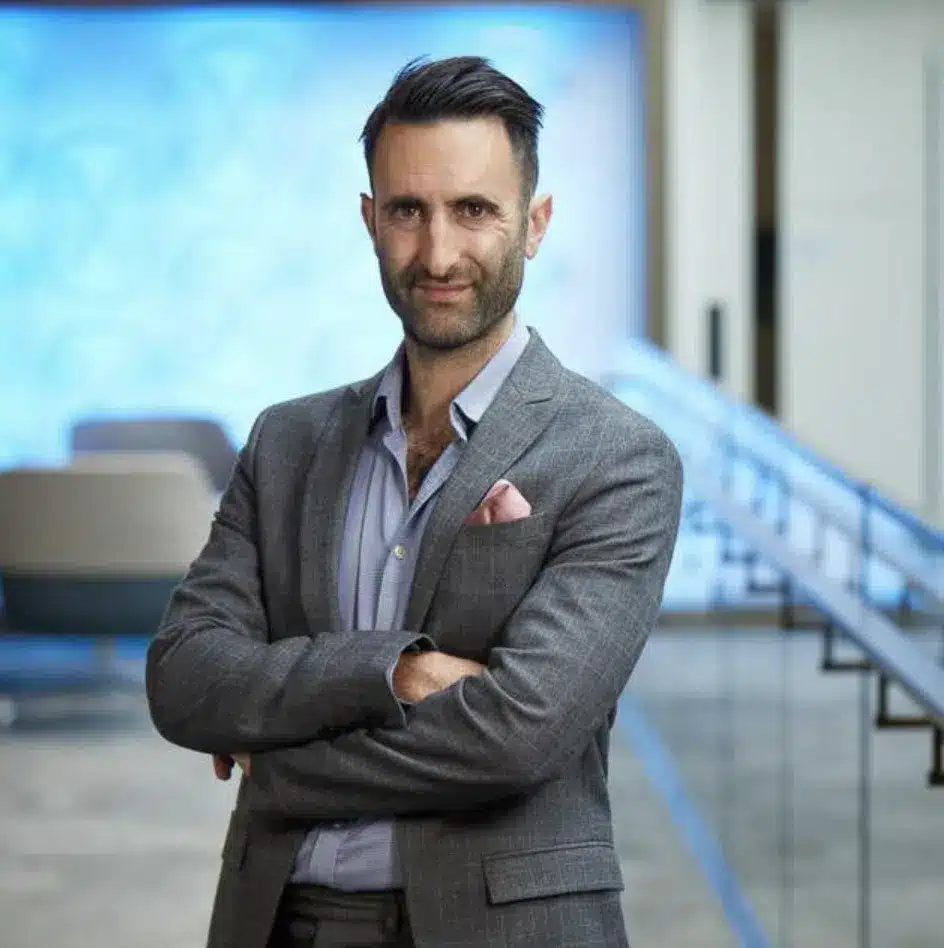

Bobby Lane is a finance leader and entrepreneur. He started his accounting career training in a large firm before pivoting to CFO roles. This allowed him to identify the growing need for outsourced services, which eventually led him to start an outsourced accounting business, which was later acquired.
In 2020, he founded Factotum, a multidisciplinary outsourcing practice that was recently named the fastest-growing professional services practice in the region.
Learning the Trade
Nick Levine: Can you tell me about how you first entered the world of finance?
Bobby Lane: After studying at university in the nineties, I took a job as a trainee accountant at BDO.
Nick Levine: When you were a trainee, which department were you in?
Bobby Lane: I was in audit, where I learned the fundamentals of financial statements, financial controls, and how the finance function of a company operates.do about it?” That was a pivotal moment for me, which led me to rethink my options.
Becoming a CFO at a Leading Ad Agency
Nick Levine: What was your next move after you became qualified?
Bobby Lane: I was headhunted by the advertising agency Saatchi & Saatchi to become the CFO of one of their below-the-line businesses, a PR company. I was in my mid-20s at the time.
Nick Levine: It must have been incredible to become a CFO at a relatively young age. What was the kind of work you were performing?
Bobby Lane: I was doing a lot of turnaround work initially. I learned how to buy companies, grow a business, and implement [operational] transformation.
Identifying the Need for Outsourcing
Nick Levine: When did you first foresee the need for companies to outsource various functions?
Bobby Lane: From an early stage, during my time at the agency, my business unit was part of a larger group, and the back-office represented a significant fixed cost. I thought, wouldn’t it be great if we could make this a variable cost and build flexibility into the business?
Nick Levine: So you initially implemented outsourcing with Saatchi’s?
Bobby Lane: Yes. I started by outsourcing the front desk, and then followed this with HR and IT. I ended up with two full-time staff internally to manage everything, but the business had flexibility and had dramatically reduced fixed costs.
Establishing an Outsourced Finance Function
Nick Levine: When did you leave this role to establish your own company?
Bobby Lane: I left the agency in 2003 to set up my own outsourcing practice, Denver Chase. We offered outsourced finance functions to SMEs. This included everything from payroll through to fractional CFOs.
Nick Levine: How did Denver Chase evolve over time?
Bobby Lane: The business grew very quickly, and clients started to ask if we could provide compliance services, too, such as year-end accounts and tax. I merged Denver Chase with a well-known compliance practice, Shelley Stock Hutter, where we went to market with a combined offering for everything.
Nick Levine: And you eventually exited the business?
Bobby Lane: In around 2016, I saw the rise of technology, such as cloud and AI, and knew we needed to evolve our model. I had a burning desire to create a multidisciplinary outsourcing practice, but my partners were approaching retirement age. With the consolidation taking place in the profession, Blick Rothenberg approached us to sell the business to them.
Building Factotum
Nick Levine: So you then went on to build a multidisciplinary outsourcing practice?
Bobby Lane: Yes. I then went on to set up Factotum. We initially provided support in five core areas that businesses need: accounting, marketing, HR, IT, and recruitment.
Nick Levine: That is quite a wide range of functions. How have you been able to provide all of these?
Bobby Lane: We have built strong teams in each vertical, led by an industry leader. The practice grew organically in the early years and latterly through acquisitions, including recruitment, IT, and marketing.
Nick Levine: Does Factotum have a client niche?
Bobby Lane: We work across all sectors. Clients include a breast cancer charity, hair salons, marketing agencies, sports teams, and property companies. We also work with many influencers, content creators, and high-growth companies.
Nick Levine: What’s next for Factotum?
Bobby Lane: We’ve proven the model [regionally] and have recently expanded [globally] to deliver our operations-as-a-service to founders. With the US home to 33 million small businesses, we have an opportunity to scale.
Automating AP to Improve Financial Control
Nick Levine: One of the areas we are touching on in this series is implementing automation in finance. Can you share an example?
Bobby Lane: We often see new clients with incredibly manual processes, typified by having to ask for POs that they can’t match, no audit trail of authorizations, and missing paperwork.
Nick Levine: So you have a playbook for solving this?
Bobby Lane: Yes, we put in place end-to-end automated app stacks covering general ledgers, invoice processing, credit control, authorizations, and management accounts preparation.
Nick Levine: How does this aid financial control?
Bobby Lane: Automation makes it easy to raise POs, match them, and get multi-level authorizations. It gives clients more control over budgets and who is approving invoices.
Nick Levine: Are there other productivity wins?
Bobby Lane: This also tends to lead to more accurate cash flows and will enable us to deliver accurate management accounts significantly faster. This allows business owners to make decisions based on real data rather than their instincts.
Bobby’s path to becoming an outsourcing entrepreneur is one of the many stories we are showcasing in the Next Gen Finance Leader series. Read our other profiles below.
