

 Back
Back 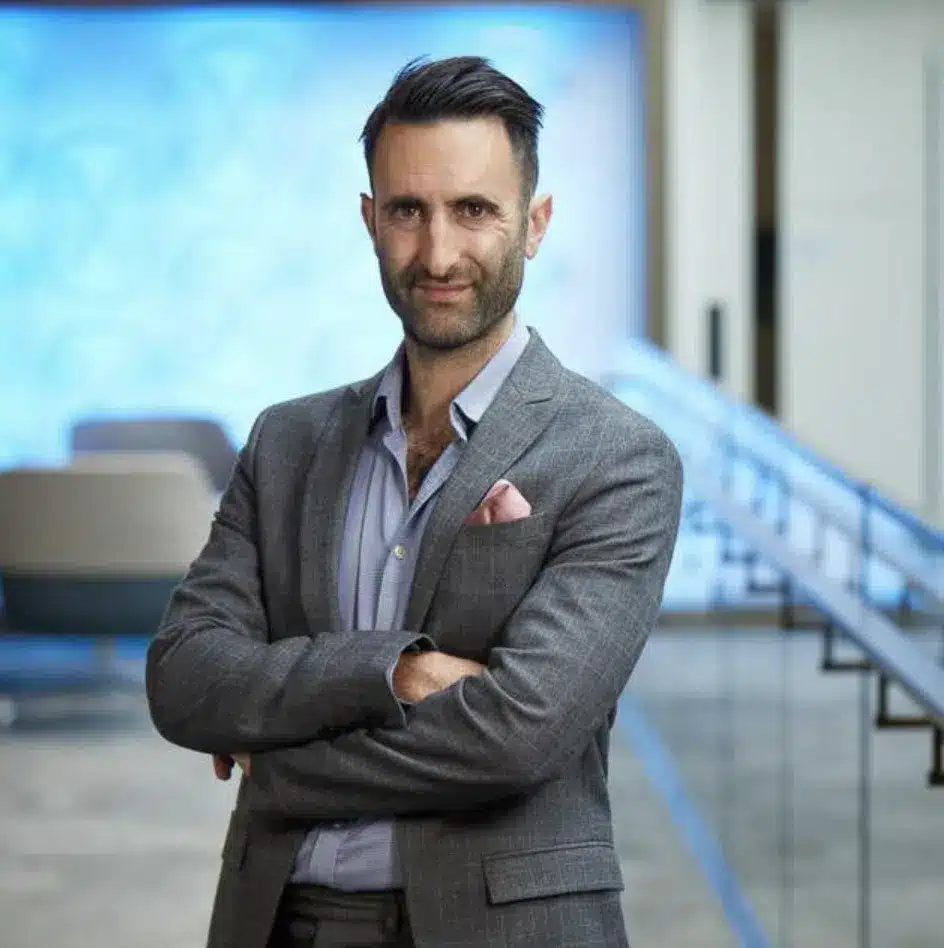

Howard Thompson is an experienced CFO who started his career at PwC and in private equity, before going on to specialize in high-growth tech companies.
He recently leveraged his career experience to launch GATHER.nexus, a platform that makes it easier to manage multi-entity businesses in the cloud.
Starting Out in The Big Four
Nick Levine: Can you tell me how you first started your career in finance?
Howard Thompson: From a young age, I had an interest in the commercial world and business finance. I would read the business pages and the Financial Times, and I studied economics. At university, I studied modern and medieval languages. I chose to start in accounting because I knew it would be a good place to learn the numbers and how finance works.
Nick Levine: What was your first job in the industry?
Howard Thompson: I started off working in audit at PwC, within the Technology, Media, and Telecommunications (TMT) division. This was in the late 90s, so it was a really interesting time with the rise of the internet.
Nick Levine: What did the work involve?
Howard Thompson: I gained a solid grounding in audit and financial controls. I was also given early responsibility for running and managing multiple teams in different locations.
Moving Into Private Equity
Nick Levine: What did you do after gaining your accounting qualification?
Howard Thompson: In 2005, I joined Deloitte’s private equity transaction services department. Private equity was a really buzzy market in 2005, with significant activity.
Nick Levine: Did this require you to learn a new set of skills?
Howard Thompson: It’s a different mindset and a lot more analytical. I had to learn the underlying drivers of businesses so I could understand value in a deal context. I had to learn how to dig into data and build out my understanding of FP&A.
Nick Levine: This type of experience must have put you in a strong position when you became a CFO?
Howard Thompson: Definitely. It gave me a broad understanding of M&A, which is part of the CFO skill set. While scaleups tend to be more focused on fundraising than on M&A, much of the knowledge is directly transferable.
Becoming a Scaleup CFO
Nick Levine: How did this eventually lead you to becoming a CFO?
Howard Thompson: After a couple of FP&A roles in the hospitality sector, I joined Everledger, a technology-led global supply chain platform, as their CFO. At the time, there were only around 10 employees, so they were at a relatively early stage. When I came on board, the company was looking to raise its Series A round.
Nick Levine: How did the trajectory of the company change during your time at Everledger?
Howard Thompson: Over the course of my tenure, we grew the company to over one hundred employees and operated in six countries across four continents. We raised around $30 million from several well-known investors.
Nick Levine: Your role must have changed a lot during that time?
Howard Thompson: When I started my role, it was heavily geared to raising our $10 million Series A investment. Once that was in the bank, my role focused more on expanding the business. The business grew increasingly complex, with multiple revenue streams, divisions, and functions.
Nick Levine: The expansion of the business must have added complexities, too?
Howard Thompson: Yes. This included managing transfer pricing arrangements across the group, cross-border transactions, and local tax compliance across multiple jurisdictions, as well as managing and presenting consolidated financials to investors.
Serving Multi-Entity Companies with Automation
Nick Levine: This almost brings us fully up to date with your career. Most recently, you founded GATHER.nexus to automate much of the grunt work in multi-entity accounting. Was this inspired by your time at Everledger?
Howard Thompson: Yes. GATHER.nexus is absolutely inspired by my experience of building a complex finance department from scratch for a growing company.
Nick Levine: What problem is your company trying to solve?
Howard Thompson: As soon as you move into a multi-entity environment, which most companies do as they expand, you need to have something that’s going to help you out for multi-entity tasks. At Everledger, our finance team used manual spreadsheets to build out consolidated reporting, create budgets for the group, and track management recharges and cross-border arrangements, while ensuring that intercompany accounts remained in balance. This was slow and impacted the visibility of the finances, which needed to be reconciled every month and week.
Nick Levine: So your company automates these tasks and transactions?
Howard Thompson: Yes. It’s a platform which automates multi-entity tasks in a single, unified workflow. The platform connects directly to cloud accounting and ERP platforms, including QuickBooks and Xero, to automate intercompany recharges, such as transfer pricing or management recharges. It also takes care of intercompany reconciliations, consolidated financial reporting across multiple currencies, and consolidated financial planning at both a divisional and functional level. This saves significant time and removes the risk of spreadsheet glitches or the need to juggle multiple different systems.
The Road Ahead
Nick Levine: What are your future plans for the company?
Howard Thompson: We will shortly be releasing the GATHER Platform 2.0, which is a big step up, particularly in terms of our advanced Intercompany Apps and also the way in which each step of the multi-entity workflow, from intercompany control through to consolidated reporting and planning, syncs together. We have also made a couple of key senior hires recently—so 2026 is shaping up to be a really exciting year for us.
Howard’s calling to support multi-entity businesses is one of the many stories we are showcasing in the Next Gen Finance Leader series. Read our other profiles below.