

 Back
Back 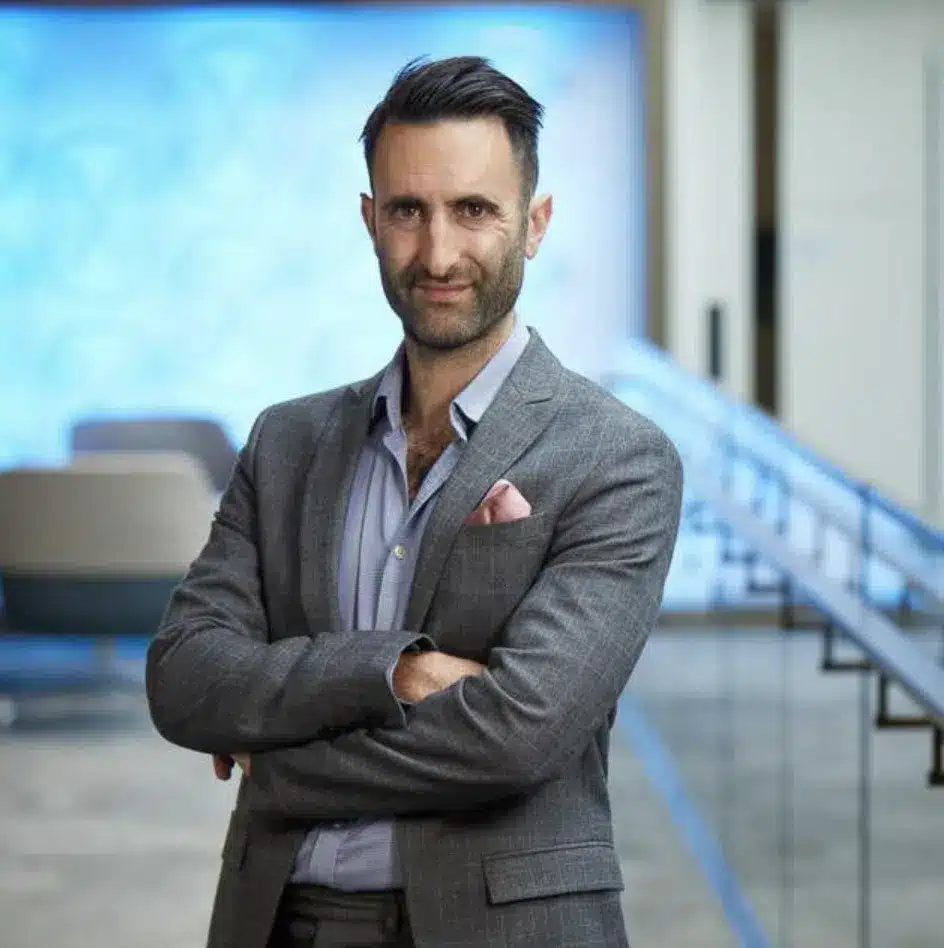

Christian Sanford studied accounting and finance at college before embarking on a varied finance career in banking and investments. After taking some time out to reflect and re-engage, he started QuantFi, an AI-enabled, full-stack strategic finance agency that supports scaling companies.
A Natural Aptitude for Accounting and Finance
Nick Levine: Why did you go down the finance route?
Christian Sanford: It was pretty practical. I was pretty good at math and found that accounting came naturally to me. It was intuitive in a way that chemistry wasn’t. My college, Texas Tech, had a strong program that funneled directly into the Big Four, so the path was clear. I got my undergrad and a master’s in accounting.
Nick Levine: So Texas Tech then lined you up with an entry route into a Big Four firm?
Christian Sanford: Yes. While I was there, I interned at a few accounting firms, including PwC, but I ultimately pivoted into a full-time corporate finance position at Commerce Street Capital in Dallas to start my career. Shortly thereafter, I got into the investment banking program at Barclays in New York.
Leveraging Experience Across the Finance Sector
Nick Levine: What type of activities were you undertaking when you pivoted into investment banking?
Christian Sanford: Investment banking gave me a front-row seat to what the finance function looks like across dozens of companies from the inside. I worked on strategic planning, M&A, and capital markets transactions. This meant I was constantly evaluating businesses using financial data, building models, and advising leadership teams on high-stakes decisions.
Nick Levine: From a previous chat, I know that you also worked as an investor. Can you tell me about that experience and what you learned?
Christian Sanford: Sure. After banking, I moved to the buy side and spent time as a hedge fund investor. When you’re evaluating businesses as investments, you develop a sharp eye for operational weaknesses, and the finance function is where those tend to surface first.
Resetting with a Career Break
Nick Levine: Before taking a leap of faith to become an entrepreneur, you took a career break. Would you recommend this to other finance professionals?
Christian Sanford: I recommend it to everyone who asks. Wall Street is not an environment for longevity or balance. The hours are brutal, the culture is intense, and you get pinned into these working environments that are not sound.
Nick Levine: What did you do during your time off?
Christian Sanford: My career break had a huge health and wellness component. I took care of myself, got deep into endurance sports, picked up swimming again, started running and cycling seriously, and eventually got into triathlons. I also spent time with friends and family, and travelled.
Nick Levine: And how did this inspire you to strike out on your own and start QuantFi?
Christian Sanford: I was able to create room to explore things that I was curious about but never had bandwidth for. This included software development, AI, and start-ups. These interests were directly responsible for what QuantFi is becoming today.
Building QuantFi
Nick Levine: I’d like to dig a bit deeper into QuantFi. Can you tell me what problem the company is trying to solve?
Christian Sanford: QuantFi exists for two types of companies. The first are growth-stage businesses that need to build a finance function—we run that for them as an AI-enabled finance department. The second are larger, middle-market, and enterprise companies that already have a finance team in place and need help implementing AI into it. Both need the same thing: a partner who understands finance and knows how to deploy AI into real workflows.
Nick Levine: What is your underlying service offering?
Christian Sanford: We run AI-enabled finance departments as a service—a network of specialists deployed across client engagements covering CFO, controller, FP&A, M&A, and accounting functions. Based on what we’ve learned running those departments, we’ve expanded into AI implementation services for larger companies with existing in-place teams. For those clients, most engagements begin with a 6-week AI Sprint—a fixed-fee diagnostic where we map their finance workflows, identify what can be automated today versus what isn’t ready, and build a quantified roadmap. From there, they choose whether we implement and maintain the automation or support their internal team in doing it.
Nick Levine: You mentioned that you did deep research on AI during your career break. How does QuantFi leverage these technologies?
Christian Sanford: Our core business is still finance departments as a service, but the offering has shifted meaningfully since we started integrating AI. Anthropic’s Opus 4.6 release is genuinely capable of handling real finance workflows, not just demos. We operate on two tracks with AI. The first is embedding AI directly into our existing and new client engagements, and the second track is building custom software and AI agents for clients with specific finance and accounting operational problems.
Using AI to Streamline and Speed up Month-End
Nick Levine: To wrap up, can you share an example of when you’ve introduced automation for a financial process and what the impact was?
Christian Sanford: Absolutely, we recently worked with a professional services company that had a month-end close process taking 15 business days. Their finance team was small and was doing everything manually.
Nick Levine: How was this impacting the business?
Christian Sanford: Billing to clients couldn’t be sent out in time, which was hurting cash flow, and leadership couldn’t get financial results until three weeks after month-end, which meant board reporting was rushed.
Nick Levine: What automation process did you put in place to solve these inefficiencies?
Christian Sanford: We mapped every step of their close process, identified where AI could take over mechanical work, and deployed automation across the highest-impact areas. We built workflows with Claude, including bank and balance sheet reconciliations, accruals, and variance analysis. Humans still review and approve everything, but 80%–90% of the work has been done.
Nick Levine: And what has been the impact?
Christian Sanford: The financial close was reduced from 15 to 6 days. This also freed up the finance team to focus on analysis, planning, and business partnering. The managing partner told us it was the first time in over a year that they felt like they were ahead of the reporting cycle.
Christian’s journey to starting up an AI-enabled finance firm is one of the many stories we are showcasing in the Next Gen Finance Leader series. Read our other profiles below.