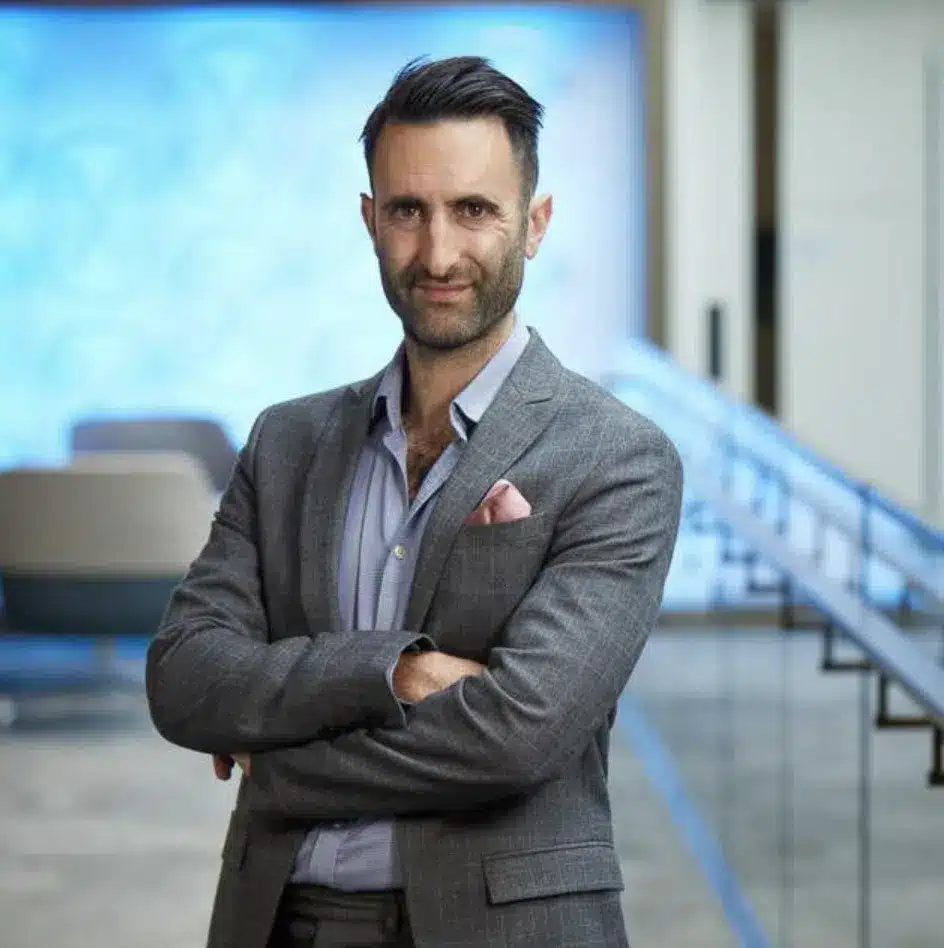

James Orsini started his career as an auditor before specializing in creative and media organizations. This included working alongside leading entrepreneur Gary Vaynerchuk for over a decade.
He currently runs J&J Consulting Services and is retained by Vyve, a former Vayner-owned business accelerator, and Factotum, a multi-disciplinary outsourcing provider.
From Auditing to Being a Lab Rat on Wall Street
Nick Levine: What first led you to seek out a career in accounting and finance?
James Orsini: It was actually a teacher at Seton Hall University. I thought I was going to be an attorney, but a professor told me I’d make a great auditor. He helped me secure a job at Main Hurdman, which eventually became KPMG. I was pulled out of school in my junior year to work the busy season, which led me down the path of being a Park Avenue, New York City accountant.
Nick Levine: You eventually moved to Goldman Sachs as a financial analyst. How was that experience during such a volatile time for the markets?
James Orsini: I was part of a pilot program where five CPAs were tracked against Wharton MBAs. They put us in the same cubicles like lab rats. I was there for Black Monday in ’87; it felt like a world war had broken out. While Goldman was a money-making machine, I realized Wall Street wasn’t for me. I wanted to be where the cool environment was—the creative side.
Becoming the Decoder Ring for Creative Giants
Nick Levine: You fulfilled this desire to move into the creative industries by spending over a decade at the PR agency MSL Group and later held major roles at Interbrand and Saatchi & Saatchi. What skills does a CFO need in the creative sector?
James Orsini: You have to be a CFO who uses finance to fuel the vision rather than choke it. I often positioned myself as the “decoder ring”—the CEO sets a vision, and I translate it into the company in a profitable way. In these environments, you’re dealing with brilliant creative minds who don’t necessarily speak the language of EBITDA. If you walk into a room and just say no, the vision is gone; you’ve lost them.
Nick Levine: Given the stereotype of people who work in finance, it must be hard to convince the CEO and C-suite that you can help execute the vision rather than just be there to manage costs. How did you achieve this?
James Orsini: I’ve found that showing an interest in the general commercial and business side of things helps establish rapport. For example, once when I was at Saatchi & Saatchi, I went on a commercial shoot, and people couldn’t understand why I was there, as they’d never had a finance or operations guy show up on a commercial shoot. I told them I was there to see what the $500,000 was being spent on.
Riding the VaynerMedia Rocket Ship
Nick Levine: You spent 11 years alongside leading entrepreneur Gary Vaynerchuk. How did that experience shape your approach to leadership?
James Orsini: When someone invites you onto a rocket ship, you don’t ask which seat, you just sit in it. We grew VaynerMedia from $42 million and 400 people to a $350 million powerhouse with 2,000 employees. Gary is a legendary entrepreneur with no shortage of ideas, and my role was to provide the structural prism for those ideas.
Nick Levine: How did you balance the need for control with Gary’s pace?
James Orsini: A visionary needs a partner to operationalize the dream. I’d ask: “How does this fit into being a $500 million integrated international communications company?” If it didn’t align with that vision, it gave me objective ground to push back. It wasn’t about stifling creativity; it was about ensuring risks were backed by operational stability. This taught me that finance builds the infrastructure that allows a visionary to stay fast and fearless.
Scaling New Heights with J&J Consulting
Nick Levine: Tell me about your current focus. How are you applying these lessons today?
James Orsini: Alongside my wife, who is also a CPA, I run a consulting practice called J&J Consulting. Two companies currently retain me. The first is Vyve, formerly owned by VaynerMedia, where I am a co-founder and their business coach. We provide leadership training, masterclasses, and professional development for entrepreneurs, founders, and C-suite executives.
Nick Levine: And what is the second company?
James Orsini: Additionally, I serve as the US Chairman of Factotum, which provides outsourced back-office solutions for small businesses. We cover services including bookkeeping, tax, fractional CFO, human resources, payroll processing, and recruiting. I believe you’ve already included Bobby Lane in this series, who started the company.
Fueling Growth Through Automation and Data
Nick Levine: In line with the Next Gen Finance Leaders series, can you share an example of a financial process you’ve automated that delivered real value?
James Orsini: In the creative world, many firms run on gut feel. They hire because they feel busy. At the Sasha Group (one of Gary Vaynerchuk’s companies), we changed that by focusing on job cost profitability. We used a specific NetSuite module that most people leave turned off, and automated data collection by training everyone to submit timesheets on their cell phones.
Nick Levine: What were the primary benefits of implementing that level of automation?
James Orsini: It moved us from subjective guessing to objective management. This allowed us to show the team hard data. I could use that automated reporting to manage resources effectively: if the data showed we were at 100% capacity, I’d approve a hire. If it showed we had 30% more billable capacity, we stayed the course. We never dipped below a 20% profit margin in five years by letting automated data drive our hiring and operational decisions.
If James’s journey to becoming the decoder ring for creative giants has inspired you, don’t stop here—explore more incredible stories and insights from rising stars in the Next Gen Finance Leaders series.
