

 Back
Back 


Ramp is generally better for companies prioritizing corporate cards and spend management, while BILL is stronger for SMB accounts payable workflows. Businesses needing global AP automation, tax compliance, procurement, and multi-entity finance operations may benefit from platforms like Tipalti.
In this Ramp vs. BILL comparison, we’ll examine their key features, pricing, and where Tipalti offers additional advantages.
Ramp vs. BILL: A Quick Comparison
| Feature | Ramp | BILL | Who Wins |
|---|---|---|---|
| Expense management | ⭐⭐⭐⭐⭐ | ⭐⭐⭐⭐ | Ramp |
| AP automation | ⭐⭐⭐ | ⭐⭐⭐⭐ | BILL |
| Global payments | ⭐⭐⭐ | ⭐⭐⭐ | Tie |
| Enterprise scalability | ⭐⭐⭐ | ⭐⭐⭐ | Tipalti |
What Is Ramp?
Founded in 2019, Ramp is a fintech company that primarily helps businesses manage spend by issuing cards, booking travel, and making payments. Later, it added procurement, accounts payable, and treasury capabilities to its platform.
What Is BILL?
BILL (originally Bill.com) was established in 2006 to help small businesses pay bills and streamline bookkeeping. After acquiring Divvy, a spend management platform, BILL added solutions such as corporate cards, expense reporting, and reimbursement.
Ramp vs BILL: Key Features
Here’s a closer look at how the two platforms compare across essential features.
Expense Management and Corporate Cards
With Ramp, businesses can issue unlimited physical and virtual corporate cards with built-in spend controls. Using the Workflow Builder, users can set up expense approval policies and build approval flows.
Employees can submit expenses via the mobile app, SMS, or integrations. The platform automates expense reports, categorizes transactions, and flags unauthorized expenses.
BILL users can issue corporate cards with spending limits and set budgets on the BILL Spend & Expense solution (formerly Divvy).
The platform automatically matches, categorizes, and codes expenses. BILL supports employee reimbursement with features such as mobile receipt upload, mileage tracking, and instant approval flows. BILL’s dashboard gives an overview of budgets, policies, spend, members, and vendors linked to the budget.
Pro Tip: Want to understand how expense management works, its types, and benefits?
Check out the in-depth article: A Complete Guide to Expense Management.
Accounts Payable Automation
Ramp’s accounts payable features include OCR-based invoice data capture, multiple approval layers, smart routing, and ERP syncing. Vendors can create an account on the vendor portal to track payments.
BILL offers multiple ways to submit invoices and uses AI to extract data and populate information, such as vendor name, invoice number, payment due date, and GL posting date.
Users can sync purchase orders and item receipts from their accounting software, and the platform routes invoices to specified approvers.
Once approved, admins can pay vendors within the BILL network via a Virtual card, ACH, or international wire transfer.
Payment Capabilities
Ramp supports international vendor payments in USD and selected local currencies. Public Ramp materials cite support for vendor payments to 185+ countries, though available countries, currencies, and payment rails vary by region, payment type, and customer configuration.
Businesses can also open a Ramp Treasury account for features such as same-day ACH and interest on deposits.
BILL supports multiple vendor payment methods, including ACH, wire transfer, and Local Transfer for eligible international payments.
Public BILL materials cite support for international business payments in 130+ countries and 100+ currencies, with availability depending on the destination corridor and payment setup.
Tax and Compliance
Users can add new vendors, request their tax details, upload contracts, and W-8s/W-9s within Ramp. The platform also verifies vendors’ TINs with the IRS.
BILL integrates with Tax1099 to collect W-9 forms. Companies can manually export the vendor list and use filters to select 1099 vendors.
Key Takeaway: While Ramp and BILL have similar features, Ramp is best suited for companies with card and expense needs, and BILL is best suited for small businesses with simple AP needs.
Ramp vs. BILL: Pricing Comparison
BILL’s Spend & Expense platform is free, while the AP and AR platforms have different pricing tiers. Ramp offers corporate cards and expense management tools in all its plans.
| Platform | Product/Module | Plan | Pricing (per user per month) |
|---|---|---|---|
| BILL | Spend & Expense | Free | $0 |
| AP and AR | Essentials | $49 | |
| Team | $65 | ||
| Corporate | $89 | ||
| Enterprise | Custom | ||
| Ramp | Integrated platform | Free | $0 |
| Ramp Plus | $15 | ||
| Ramp Enterprise | Custom |
Key Takeaway: Ramp offers a free plan with basic AP features and an affordable paid plan.
How Tipalti Extends Beyond Ramp and BILL
Ramp and BILL each cover important parts of spend management and AP, but their strengths are different. Businesses with more complex global AP, tax, procurement, or multi-entity requirements may need a platform with broader workflow coverage.
If you’re scaling internationally or managing more complex AP and payment operations, it may be worth evaluating a platform like Tipalti alongside Ramp and BILL.
Here’s a quick comparison that shows how Tipalti is a smarter alternative:
| Capability | Tipalti | Ramp | BILL |
|---|---|---|---|
| Supplier onboarding & tax compliance | Self-service supplier onboarding, tax validation, withholdings, and eFiling in one workflow | Optional vendor portal, tax detail collection, automated tax coding for receipts (Plus plan), 1099 filing | BILL vendor network with W-9 collection, 1099 filing |
| Procurement & invoice automation | Strong AP + procurement coverage with AI-assisted intake, approval routing, advanced matching, and e-invoicing support | AI-enabled AP automation and approvals, procurement and invoice controls | Core AP workflows with invoice automation and procurement support |
| Cards & expense management | Built-in cards and expense management connected to AP, procurement, and reconciliation | Strong card and expense management is one of Ramp’s core strengths | Solid expense and card capabilities through BILL Spend & Expense |
| Global payments & FX | Broad global payment coverage, multiple payment methods, and advanced FX capabilities | International payments supported, with some capabilities routed through partners | International payment flexibility and lighter FX capabilities |
| ERP sync & reconciliation | Deep ERP integrations, automated reconciliation, and stronger reporting controls | Good ERP connectivity, with more advanced options tied to higher-tier plans | ERP support is stronger on higher tiers |
| Multi-entity control | Centralized multi-entity workflows, controls, and visibility | Some multi-entity support, but fewer entity-specific workflows and controls | Limited multi-entity workflow depth |
Key Takeaway: Tipalti is the stronger fit for finance teams that need AP automation, global payments, tax compliance, and multi-entity control in one connected platform.
The table above shows the areas where Tipalti excels. But here’s a detailed look at all the ways that Tipalti wins over the two platforms.
Connect procurement and AP in one workflow
Tipalti brings together AP automation, procurement, and spend management —with better visibility from request to reconciliation.
Comprehensive AP solution
Tipalti uses AI, ML, and intelligent matching techniques to fast-track invoice management. The platform accurately captures invoice data, detects duplicate invoices, auto-codes, and suggests an approval sequence based on historical invoice patterns.

Generative AI to auto-code invoices
The platform supports invoice data capture in [num_languages] — a feature that most of its competitors lack.
Tipalti’s multi-entity AP automation functionality is more comprehensive than that offered by most SaaS providers in the fintech sector. Users can configure entity-specific branding, tax onboarding, approval flows, reconciliation, and reporting for each entity.
That’s not all. Tipalti AP seamlessly integrates with Tipalti Procurement and Tipalti Expenses to streamline Procure-to-Pay and spend management workflows.
Built-in Global Tax Features
One of the strong suits of Tipalti is its built-in global tax compliance capabilities that meet IRS requirements (as prescribed by KPMG), plus OFAC and sanctions screening before processing payment.
The platform’s guided tax form wizard selects the appropriate tax form based on business structure and country, and validates the supplier tax ID across 200+.
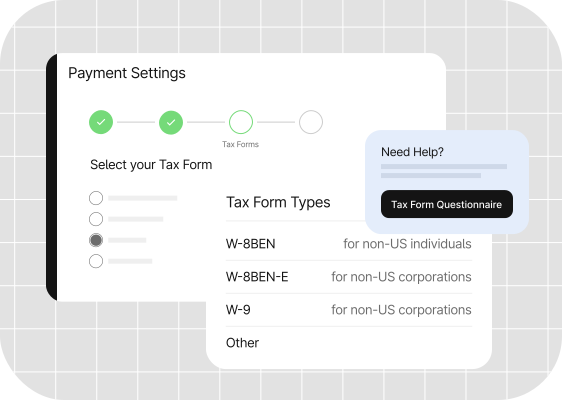
Tipalti’s guided tax form wizard streamlines onboarding
Robust integrations
Tipalti has deep API integrations with leading ERPs, including QuickBooks Online, NetSuite, Sage Intacct, Acumatica, Xero, and Microsoft Dynamics.
In addition, Tipalti offers seamless ERP integrations via pre-built connectors, using a no-code, drag-and-drop interface.
Smart Supplier Management
Tipalti offers advanced supplier management features, such as a dedicated vendor portal and robust payment validation rules.
With a branded supplier portal available 24/7, suppliers can update their contact details, choose payment methods, set custom thresholds, view invoices, and view payment history.

Create a branded supplier portal on Tipalti
Effortless Global Mass Payments
Tipalti’s mass payment platform allows users to pay vendors across 200+ in 120, using 50+. With [num_ global payment validation rules], Tipalti reduces payment errors.
Tipalti’s advanced payment configuration options include setting thresholds and incentivizing payees to use the most cost-effective payment methods.

With Tipalti, users can set payment thresholds to minimize costs
Integrated Spend Management
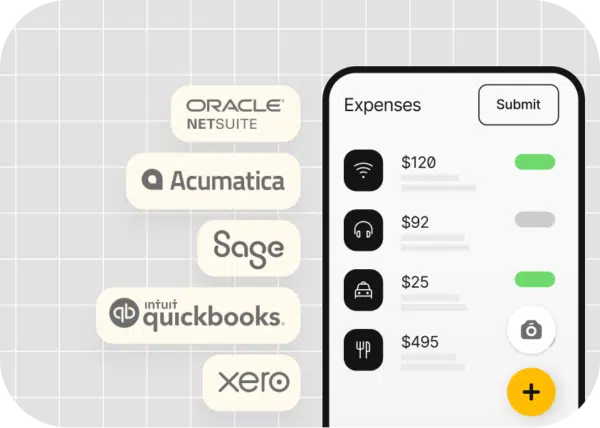
Tipalti Expenses integrates with AP, procurement, and cards
Tipalti Expenses integrates with Tipalti Card, AP, and Procurement solutions to allow businesses to manage all spend in a centralized platform.
Admins can issue unlimited physical and virtual corporate cards with built-in spend controls, while Tipalti also integrates with Mastercard, Visa, and American Express cards.
Employees can attach receipts and submit them via mobile, while the platform auto-categorizes transactions, automates expense reports, and streamlines approvals. Tipalti also supports global reimbursements across multiple currencies and payment methods.
In addition to flagging unrecognized payments, Tipalti automatically captures tax details for every expense. Transactions across cards sync in real time with leading ERP systems.
Tipalti supports multiple ways to manage card-related spend. Teams can issue physical and virtual corporate cards for employee expenses and recurring online payments, pay eligible invoices by card to earn cashback, and sync third-party corporate card transactions into expenses—all with automated reconciliation and ERP-ready reporting.
Key Takeaway: Tipalti offers spend management, AP automation, tax compliance, and mass payments for businesses of all sizes.
Ramp vs BILL vs Tipalti: Which Solution Is Right for You?
The choice between Ramp, BILL, and Tipalti comes down to your business’s unique requirements. Here’s a quick guide that helps you make the right choice:
Who Should Choose Ramp?
Choose Ramp if:
- Corporate cards are your priority
- Spend controls matter most
- You need basic AP and procurement features
Who Should Choose BILL?
Choose BILL if:
- You’re an SMB with a domestic focus
- You’re an SMB that needs AP, AR, and spend management together, with lighter international payment complexity.
- You handle low invoice and payment volumes
Who Should Choose Tipalti?
Choose Tipalti if:
- You’re a multi-entity business
- You need a secure mass payout system to pay vendors, affiliates, and partners across the globe
- You handle large payment volumes in multiple currencies
- Your tax compliance needs are complex
BILL and Ramp have their strengths, but they lack certain critical features that modern businesses need to stay competitive.
Tipalti’s SaaS offerings in AP, mass payments, procurement, and expenses continue to make it the preferred solution.
If you’re looking for a holistic platform to intelligently manage spend and the entire P2P process, Tipalti offers the end-to-end visibility and control your finance teams need.
Ready to Go Beyond BILL and Ramp? Simplify Spend with Tipalti
Tipalti eliminates 80% of the workload managing payables—with AP automation, global payments, and built-in spend control in one platform.
Ramp vs. BILL FAQs
Is Ramp Better Than BILL?
The answer depends on your business’s needs. For businesses that want cards, travel, and expenses, along with basic AP automation, all in one place at a lower cost, Ramp is the better fit.
BILL is better suited to domestic businesses with lower invoice volumes that need AP, AR, and spend management together.
What Is a Ramp Credit Card?
Ramp offers a corporate charge card with a 30-day payback period. The credit limit depends on the revenue and other factors. Admins can issue physical and virtual cards to employees with preset limits, and track spend via Ramp’s dashboard.
Which Is Cheaper, Ramp or BILL?
Ramp is the cheaper alternative if you’re looking for a unified AP and expense management platform. Ramp offers a free plan with limited features and a relatively low-priced Plus plan at $15/user/month.
If you only require expense management software, BILL is a better choice as its Spend & Expense software is free.
BILL’s accounts payable and receivable plans are priced at $45/user/month for Essentials, $65/user/month for Team, $89/user/month for Corporate, and custom pricing for Enterprise.
Both platforms charge transaction fees that vary by payment method.
Which Platform Should a Growing Business Choose?
Tipalti is designed to cater to the complex AP and tax compliance needs of growing businesses. If your business’s pain points are managing AP workflows across multiple entities and scaling international vendor, affiliate, or contractor payments with built-in tax compliance, Tipalti is the right fit.
