

 Back
Back Home / AP Automation / AP Reporting
Real‑Time AP Reporting & Compliance Analytics
Gain complete AP visibility across all entities and strengthen control with AI-powered reporting and compliance insights






































Accounts Payable Reporting Features

AI-Driven Accounts Payable Reports
Tipalti’s AI Assistant makes accounts payable reporting as simple as asking a question. Just type a natural language prompt, like “unapproved purchase requests”, “unpaid invoices”, or “accounts payable aging report”, and get immediate insights. Save your invoice reports, download them for deeper analysis, and move faster with clear, real-time insights that support informed decisions.
Payment, Invoice, and Reconciliation Reports
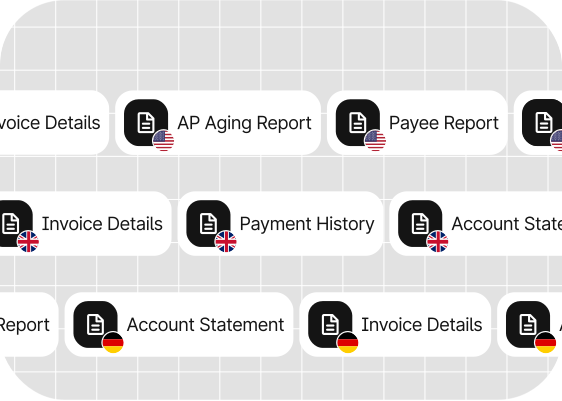
Get detailed payment reports with customizable filters. Track payment statuses, invoice details, due dates, and reconciliation data across all entities and currencies. Our reports can help ensure timely payments, improve cash flow, and build stronger vendor relationships.
Tipalti also syncs payment and invoice data to your general ledger (GL accounts) for easier account reconciliation and visibility into outstanding liabilities. Use these insights to prioritize vendor payments, fine-tune payment terms, capture early payment discounts, and streamline your AP process.
Comprehensive Tax Reporting and Compliance
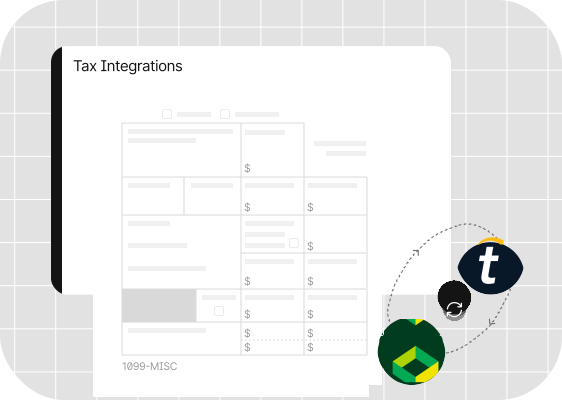
Skip year-end compliance headaches with comprehensive financial reporting across all jurisdictions. Generate IRS-compliant 1099-MISC, 1099-NEC, and 1042-S forms with automated mapping and withholding calculations. Meet EU DAC7 reporting obligations for digital platforms with quarterly payment tracking and vendor information collection. Integrate seamlessly with Zenwork for direct e-filing to the IRS and automated form distribution to recipients.
Complete Audit Preparedness and Compliance
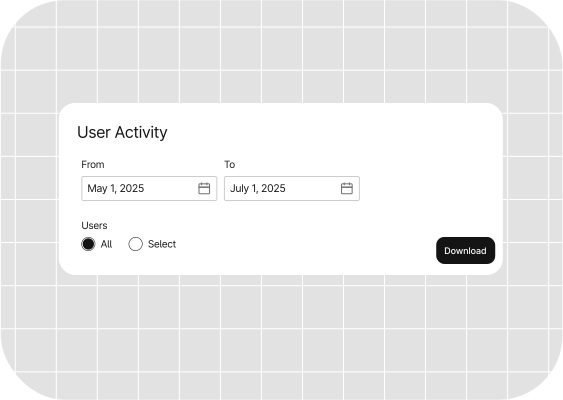
Become audit-ready with detailed activity reports and complete audit trails. Track every action in your system, from invoice processing and payment approvals to system updates, with timestamps, IP addresses, and user data to reduce human error and maintain the highest standards of governance.
Access tax forms, filings, and historical data to meet IRS and international compliance requirements. Tipalti’s automation supports clean audits, accurate trial balance reports, and fast resolution of short-term discrepancies, giving finance teams confidence in their numbers and improving overall financial health.
Integrations
Pre-built connections to extend automated workflows
Easily extend and simplify your workflows with pre-built integrations and powerful APIs for your ERPs, accounting systems, performance marketing platforms, HRIS, SSO, Slack, credit cards, and more.





Testimonials
Don’t just take our word for it,
see what our customers are saying
Customer Stories
Explore our customer success stories

 Accounts Payable
  United States
  Non-profit
 100 – 1000
 Software and technology
 Card
Card  Healthcare
 Business services
 Expenses
  E-Commerce & retail
 Mass Payments
  AdTech
 More industries
Platform Features
Work smarter, not harder
With AI and machine learning capabilities, an intuitive UX, and quick and easy global payments, you can drive unprecedented efficiency.



Awards
#1 Award-Winning Finance Automation Solution

The FinTech Awards
Best SaaS for FinTech 2025

2025 Deloitte Technology
Fast 500
Awarded to Tipalti for the 8th consecutive year

2025 CNBC World’s Top Fintech Company
Awarded to Tipalti for the 3rd consecutive year

Leader in the IDC 2024 MarketScape
Worldwide Accounts Payable Automation Software for Midmarket

Ready to Save Time and Money?
Book a demo to get started today and take control of your finance operations with Tipalti.


Recommendations
Access All Insights on AP Reporting

Accounts Payable Reporting FAQs
What is accounts payable reporting?
Accounts payable reporting is the process of tracking, summarizing, and analyzing a company’s outstanding bills and obligations to suppliers. It provides visibility into overdue payments, the impact on cash flow, and overall financial obligations.
It plays a critical role in effective financial management by helping teams understand liabilities, payment timing, and how payables affect cash flow.
What are the benefits of AP reports for finance teams?
AP reports provide finance teams—including the CFO, AP managers, and controllers—with actionable insights that support better control, accuracy, and decision-making, including:
- Improved cash flow and liquidity: Visibility into outstanding bills, late payments, and days payable outstanding (DPO) helps teams manage liquidity and plan expenditures more effectively.
- Reduced errors and cost savings: Monitoring accounts payable metrics helps identify duplicate payments and overpayments, reducing errors and unnecessary costs.
- Stronger operational efficiency: Clear insight into payment processes and approval workflows enables the AP department to streamline operations, support effective vendor management, and improve overall operational efficiency.
- More informed strategic decisions: AP reports surface spending patterns and KPIs that support data-backed financial and strategic decisions.
How does reporting mitigate bottlenecks in the accounts payable process?
AP reporting mitigates bottlenecks in the accounts payable (AP) process by providing real-time visibility into inefficiencies, improving approval workflows, enabling data-driven decisions, and facilitating proactive compliance.
This visibility helps teams resolve delays faster and maintain positive supplier relationships.
How does AP automation support AP reporting and analysis?
AP automation software streamlines data collection and processing, making AP reporting faster and more accurate. For example, Tipalti Accounts Payable’s reporting capabilities provide finance teams with real-time insights, customizable dashboards, and detailed analytics that simplify tracking liabilities and support smarter decision-making.
In an accounts payable software with advanced analytics comparison, Tipalti offers stronger automation and more detailed reporting than many traditional platforms. Its dashboards and real-time insights help finance teams track payments, spot trends, and manage cash flow more efficiently.
How can AI improve accounts payable insights?
AI can improve accounts payable insights by analyzing large volumes of transaction data to identify patterns, flag anomalies, and forecast cash flow needs. This helps finance teams make faster, more informed decisions while reducing errors and manual effort.
For example, with Tipalti’s Reporting Agent, finance teams can generate customizable, real-time reports that make these insights actionable and reduce manual effort.
These insights can also extend into procurement activity, helping teams understand how purchasing patterns affect liabilities and cash flow.
What are the best practices for analyzing accounts payable data?
Best practices for accounts payable analytics include regularly reviewing payment trends, monitoring outstanding liabilities, and utilizing automation tools to minimize errors and streamline reporting.
Leveraging tools like Tipalti enables finance teams to apply these best practices efficiently, providing real-time, actionable insights.
What are the key metrics for evaluating accounts payable (AP) reporting?
The key metrics for evaluating Accounts Payable (AP) reporting include cost per invoice and invoice processing time, which help measure and optimize the efficiency of AP workflows and the overall performance of the AP team.
What insights derived from AP data are most critical for accurate forecasting and successful cash flow management?
AP data directly enhances cash flow management when an AP team utilizes invoice due dates and discount terms to strategically time payments.
This analysis enables organizations to precisely forecast liabilities, optimize working capital, and proactively control the flow of funds.