

 Back
Back 

More than a third of businesses plan to expand globally within the next 12–24 months. Yet many lack the systems to support long-term growth, relying on problematic manual operations and outdated tools that aren’t built to scale.
Global payout solutions address the operational and strategic challenges finance teams face when expanding into new territories and managing rising payment demands.
In this guide, we’ll explore the common pain points keeping finance leaders up at night and what to look for in a global payout solution to solve them. We’ll also share best practices to help you improve payout efficiency.
Key Takeaways
- Manual global payout processes create compliance risks, unpredictable costs, and operational bottlenecks that prevent scaling.
- Global payout solutions handle payee onboarding, tax compliance, and multiple currencies and payment methods to streamline mass payments.
- Combine payout solutions with best practices like self-billing, transparent payment schedules, custom automations, and robust auditing to improve payment efficiency.
- Mass payment software like Tipalti simplifies international payouts by automating your end-to-end payment workflow, verifying payees, and protecting you against fraud.
How Global Payout Solutions Drive Growth and Efficiency
Global payout solutions (also called mass payment solutions) automate and streamline how companies send payments to suppliers, contractors, affiliates, and partners worldwide.
Software consolidates an otherwise fragmented, manual process into a single system that handles everything from payment processing to compliance management.
It removes the complexity of navigating international wire transfers, regional tax forms, and global regulations, so you can pay a supplier in Europe as efficiently as a freelancer in the U.S.
The result is less time spent on operational tasks and more time on supplier management initiatives that drive business growth.
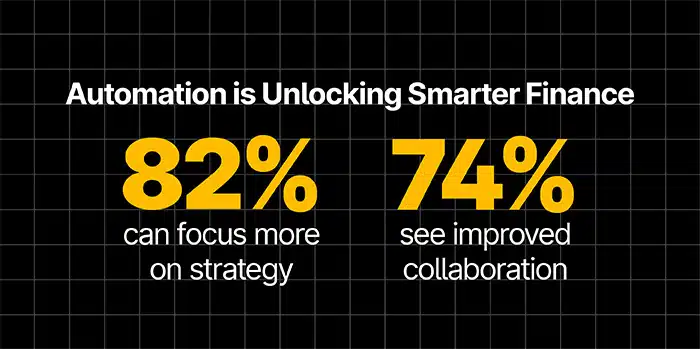
Additionally, 82% of finance leaders say automation helps them focus more on strategy, according to a recent Tipalti Global Financial Outlook report. 74% see improved collaboration.
Increased efficiency comes from several core capabilities that global payout solutions offer:
- Mass payouts enable you to pay hundreds or thousands of recipients simultaneously, turning days of manual work into an autonomous process. Batch processing ensures everyone receives accurate, timely payments that align with your cash flow.
- Payment APIs integrate directly with your existing ERP, marketplace platform, or custom software to eliminate double data entry, reduce errors, and create seamless workflows.
- Embedded tax compliance handles tax form collection (like W-9s and W-8s), validates recipient information, manages withholding calculations, and generates the reporting you need to stay compliant across jurisdictions.
- Payment rails let recipients receive payments in their preferred method and local currency—from ACH and wire transfers to PayPal, local bank transfers, and digital wallets. Diversity improves the payment experience and often reduces costs.
- AI automation intelligently routes payments, flags exceptions, and surfaces patterns across financial workflows to improve efficiency. Finance AI can boost productivity by detecting duplicate invoices, identifying suspicious requests, ensuring cost-effective payments, and generating reports.
- Enterprise-grade financial controls and governance enforce approval workflows, role-based permissions, and risk management across entities—ensuring that oversight doesn’t break down as you scale.
- Real-time visibility into global cash flow and payout performance gives finance leaders the data they need for executive decision-making and liquidity planning.
- Scalable infrastructure that supports multi-entity and cross-border expansion means the platform can grow with your business without requiring costly rebuilds or additional headcount.
Essentially, the right finance automation solution provides the infrastructure to manage the unique challenges of expanding your marketplace or platform into new territories and markets.
We’ll explore key features and their benefits more later. First, let’s take a closer look at the common pain points teams face when scaling cross-border payments.
5 Common Challenges of Global Payouts
Whether you’re a CEO concerned about scaling into new markets, a finance leader drowning in manual reconciliation, or an operations manager dealing with frustrated suppliers, global payment complexity can hold your business back.
Here are five persistent issues that marketplaces and platforms run into as they grow.
1. Managing Cross-Border Regulatory and Tax Compliance
When you’re paying recipients across multiple jurisdictions, staying compliant becomes exponentially more complex.
Countries and territories have their own tax laws, reporting requirements (e.g., the EU’s DAC7), and financial regulations.
For each payee, you need to:
- Obtain name, address, and payment details.
- Collect the right tax forms (e.g., W-9s for U.S. recipients and W-8BENs/W-8BEN-Es for international payees).
- Validate Tax Identification Numbers (TINs) and Foreign TINs.
- Calculate withholding requirements for international contractors.
- Generate reports for various tax authorities.
Missing a form or miscalculating withholding puts you at risk of penalties, regulatory audits, and potential legal exposure.
In a traditional setup, finance teams can spend countless hours chasing down tax documentation from payees, manually reviewing forms for accuracy, and researching tax requirements for new countries.
This compounds during tax season, when teams have to pull together 1099s, 1042-Ss, and other year-end reports.
If you’re paying thousands of recipients globally, the administrative burden can require dedicated headcount just to manage compliance and avoid failures that can damage your reputation with partners and regulators.
2. Unpredictable Payment Costs
When you’re paying in multiple currencies, even small fluctuations in foreign exchange rates and payment fees add up significantly across hundreds of transactions.
Different payment services also carry different fee structures. Wire transfers are expensive (generally $30 to $50). ACH is cheaper, but slower. Intermediary banks can also add hidden fees.
Without transparent pricing and optimized routing, you’re likely overpaying for every transaction.
Not knowing the true all-in cost until after the transaction clears can affect cash flow planning and erode profitability, especially if you operate on thin margins.
Payees can feel the impact, too. Receiving less than expected due to unfavorable exchange rates or intermediary fees leads to confusion and dissatisfaction, which ultimately results in higher churn.
3. Limited Payout Options for Global Payees
Different countries have different financial institutions and preferred payment methods that determine how you pay service providers. For example, a contractor in Germany might prefer a local bank transfer, while a freelancer in Nigeria relies on a digital wallet.
As your platform grows, if you can only send wire transfers or PayPal payments, you’re forcing recipients into channels that may be slow, costly, or unavailable to them.
Some payment options also have minimum thresholds or long settlement times, which can frustrate payees who need faster access to their money.
This creates a poor payment experience that can affect retention—especially for marketplaces and platforms where creators and sellers can switch to a competitor offering more convenient payment methods.
4. Fraud Risk Across Global Payment Networks
Cybercriminals target international payments because they’re harder to trace and recover once funds cross borders—and they’re a persistent and unpredictable threat.
79% of U.S. organizations were targets of payment fraud in 2024, according to a report by the Association for Financial Professionals.
Common fraud schemes include:
- Business email compromise (where attackers impersonate executives or vendors to redirect payments)
- Fake supplier accounts
- Invoice manipulation
- Payment diversion
Global payout workflows that involve multiple parties and systems create more opportunities for bad actors to exploit gaps in your processes.
Manual workflows are particularly vulnerable because attackers can use sophisticated social engineering to fool human verification.
Beyond the financial hit, fraud incidents damage trust with legitimate payees, require time-consuming investigations, and may trigger regulatory scrutiny.
Implementing extra manual checks and verification steps can offer protection. However, these measures add operational costs while slowing down onboarding and payments.
5. Reliance on Manual Payout Processes
Managing global payouts through spreadsheets, email, and manual data entry across multiple banking portals and payment platforms is your biggest barrier to growth.
Manual processes are slow, error-prone, inefficient, and hard to scale:
- Copying payment details from one system to another creates opportunities for typos that can send money to the wrong account.
- Email-based approval workflows create bottlenecks.
- Reconciling payments across multiple platforms means manually matching transactions in your accounting system.
Finance teams can spend days each month fixing mistakes, chasing approvals, and processing payments, which slows payment cycles and frustrates payees.
The vast majority of business decision-makers agree. 91% say fast, reliable, and secure payments fuel business growth, according to Amex Trendex research.
Efficiency also combats payout delays. 26% of suppliers say they have stopped working with a buyer because of late payments.
Payment delays create cash flow issues, delay tax payments, and force business owners to rely on credit cards.
Paying on time is crucial to the lifeblood of your suppliers and to your reputation.
The only way to keep up with higher payout volume manually is to keep hiring. However, increasing costs without improving outcomes is never a sustainable way to grow.
Build a mass payout engine that scales with your company
Learn how to implement scalable global payouts that prioritize speed, compliance, and payee experience. Our free guide walks you through four steps to create a performance-to-pay engine that grows with you.
How Tipalti Simplifies End-to-End Global Payouts
We’ve already mentioned how global payout solutions address the pain points you face when trying to scale.
Here’s how Tipalti’s Mass Payments software uses AI and automation to solve challenges in practice.
1) Centralize Payee Onboarding and Compliance
Chasing payees for payment and tax information is a significant time drain and prone to missed documents. Tipalti solves this with a self-service portal where payees complete their own onboarding.
You invite new vendors to your supplier portal by email. They work through the required steps in one place:
- Entering payment details.
- Selecting preferred payment method.
- Submitting required tax documentation.
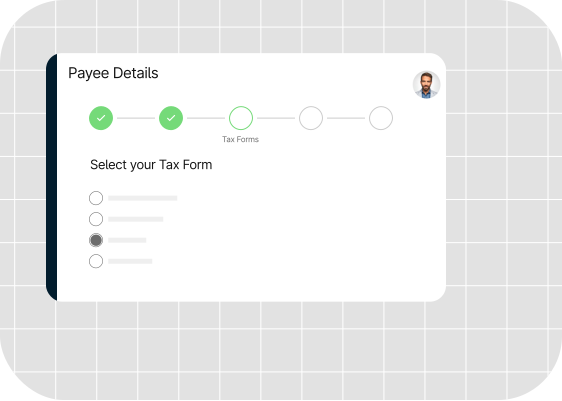
Tipalti’s AI-powered software accelerates the onboarding process, determining which tax forms you need based on the payee’s location and validating information in real time.
This eliminates the back-and-forth of chasing down missing forms and ensures compliance from day one.
2) Automate Validation and Verification Before Releasing Payments
Before you pay anyone, Tipalti Detect runs authentication checks to catch errors and prevent fraud.
The software:
- Validates bank account details.
- Screens payees against international sanctions lists (e.g., OFAC) to meet anti-money laundering (AML) requirements.
- Flags and notifies you of suspicious activity or duplicate invoices.

All payment data is cross-referenced with your records to ensure accuracy.
Adding this layer of automated verification to your workflow reduces the risk of costly mistakes and fraudulent transactions, without slowing down legitimate payments.
3) Customize Approvals and Mass Payouts
Tipalti lets you configure approval workflows based on your business rules, such as:
- Payment amount thresholds
- Department requirements
Vendor type
The software routes requests to the correct approver and sends reminders to prevent delays.
Once approved, you can execute mass payouts in seconds via our payout API, paying hundreds of international suppliers simultaneously from a single account.

Tipalti converts currencies and sends each payment through the most cost-effective method based on the payee’s location and preferences, optimizing for both speed and cost.
4) Reconcile Payments in Real-Time for Audit Readiness
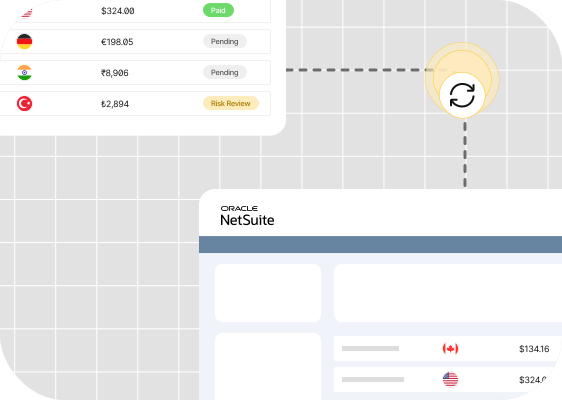
Every transaction is automatically logged and reconciled in Tipalti, creating a complete audit trail.
Payment data syncs with your ERP or accounting system, eliminating manual reconciliation work. Here’s how Tipalti integrates with Oracle NetSuite:
Finance leaders get real-time visibility into:
- Payment status
- Transaction costs
- Compliance documentation
When audit season comes around, all the information you need—payment records, tax forms, approval histories—is organized and accessible in one place.
By managing onboarding, compliance, and cross-border payouts in a unified system, you can reduce manual workload, minimize errors, and accelerate financial close.
The outcome? The ability to scale globally without extra headcount and deliver a payee experience that increases trust and loyalty.
5 Key Factors to Look For in a Global Payout Solution
The right global payout solution reduces risk, improves visibility, and supports international growth.
Each platform has different features and functionality that you’ll need to consider strategically. However, there are some non-negotiables.
Here are five essential elements to look for when evaluating mass payment software.
1. Built-in Compliance Coverage
Regulatory risk grows exponentially as your company expands into new markets. Embedded compliance reduces reliance on manual checks, minimizes exposure to penalties, and helps ensure you process payouts accurately and on time.
Look for software that:
- Has native Know Your Customer (KYC) capabilities to meet Customer Identification Program (CIP) and Customer Due Diligence (CDD) requirements.
- Automates tax form collection and validation for global payees in your target markets.
- Runs withholding, sanctions screening, and regulatory checks before releasing payments.
- Regularly updates compliance rules and functionality in line with regulatory changes.
Compliance should fit seamlessly into your payout workflow. You should be able to scale while knowing you’re applying regulatory requirements consistently, without adding operational overhead.
2. Global Reach with Local Payment Capabilities
Reach is crucial for paying suppliers in your target countries and expanding into new markets.
Focus on your current use cases and where you plan to grow. A truly global payout solution should cater to these countries with strong payment rails and multi-currency support, so providers can get paid however they prefer.
For example, a solution that supports payouts in Brazil might appeal to your needs. However, if the only payout option is a wire transfer, it’s unlikely to be cost-effective.
Choose a solution that routes payments through local payment rails, with flexible options to improve speed and reduce transaction costs.
Top payment methods for global payees include:
- Local bank transfers (e.g., International ACH, SEPA, and SWIFT)
- Real-time payments (RTP) for instant disbursements.
- Digital wallets (e.g., PayPal) for 24/7 global payments.
- International wire transfers for large or urgent payouts.
- Prepaid debit cards and virtual cards in countries with limited banking infrastructure.
- Paper checks where other methods are limited.
The easier the software makes paying suppliers, the better their experience—allowing you to attract and retain the best freelancers, creators, and affiliates.
3. Financial Visibility
Financial transparency is crucial for accurate forecasting, cost control, and explaining payment amounts to recipients. Without it, budgeting becomes guesswork.
Look for a payout solution that:
- Shows all-in costs upfront, including FX rates, transaction fees, and intermediary charges.
- Provides detailed reporting on payment spending by currency, region, payee, and payment method.
- Offers real-time dashboards for tracking payment status and cash flow.
- Enables cost analysis and forecasting based on historical payment data.
Keeping a handle on payment status enables you to optimize your payment strategy, identify cost-saving opportunities, and maintain predictable budgets as you scale.
Note: Ensure you factor software costs into your evaluation. Seek out information on transaction fees, monthly plans, set-up costs, and currency conversions. These details contribute to the total cost of paying global suppliers. You can also use Tipalti’s payment error cost calculator to see how much automation could save you by eliminating manual errors.
4. Integration with Existing Finance and Tech Systems
You’re investing in a global payout solution to improve efficiency and scale operations. For software to empower this, it needs to connect seamlessly with your ERP, accounting software, and other business tools.
Your solution should cut manual data entry and ensure accuracy from onboarding to reconciliation.
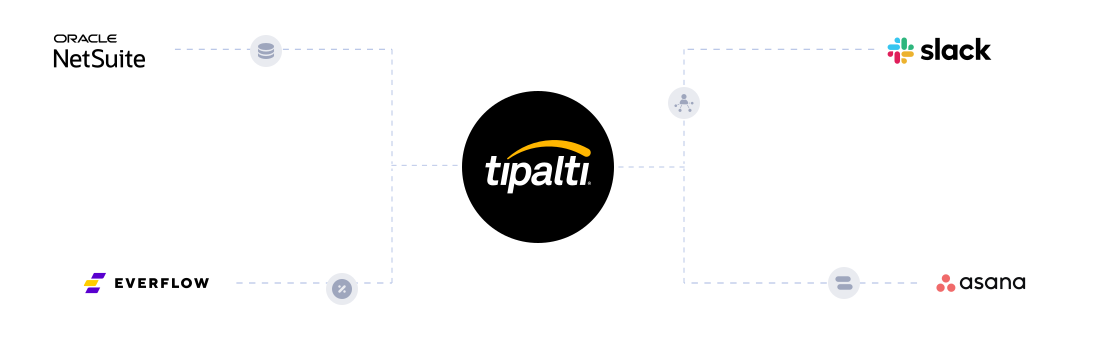
Look for software that has native integrations with your tools. For example, Tipalti offers prebuilt integrations with popular platforms like NetSuite, Xero, SAP, Slack, and Everflow.
These help you easily extend your workflows and build a robust ecosystem without extensive development work.
Next, check that you can leverage payment API integrations to customize your global payout solution around your specific needs.
All integrations should support automated data syncing to keep payment records current across platforms. Additionally, they should provide webhook capabilities for real-time notifications and workflow automation.
Strength in this area reduces implementation time, minimizes ongoing maintenance, and creates a unified source of truth for payout data across your organization.
5. Strong Customer Support
Even the most experienced of finance and development teams face issues when implementing complex workflows. Responsive, knowledgeable support can make the difference between a smooth operation and costly delays.
Look for a payout platform that:
- Offers multiple support channels (phone, email, chat) with good response times.
- Provides dedicated account management for onboarding and ongoing optimization.
- Maintains comprehensive documentation, training resources, and self-service tools.
- Has expertise in global payments, tax compliance, and cross-border regulations.
Quality support ensures you can resolve issues quickly, optimize your use of the platform, and tap into expertise to navigate global payment scenarios.
Note: Support also extends to payees. Ensure a payout solution allows suppliers to easily track payments, update business and banking details, and access self-service guidance via desktop and mobile.
5 Best Global Payout Software Solutions
Not every global payout solution is built for the same stage of growth or operational complexity. Some are better-suited to simple international transfers, while others are designed for high-volume payout workflows and broader financial controls.
Below are five widely used solutions and where each tends to fit best.
1. Tipalti: Best for large partner ecosystems and high payout volumes
Tipalti is a global payout automation platform that manages the entire payout lifecycle—from payee onboarding and tax form collection to payment execution and reconciliation.

Businesses can send payouts to 200+ countries in 120 currencies using multiple payment methods, while integrating payout data directly with ERP and finance systems.
It’s built for organizations that need more than just payment execution. The platform adds automation, compliance controls, and financial workflows that help finance teams manage complex global payout operations at scale. AI-powered capabilities can also help detect anomalies, streamline approval workflows, and surface insights from large volumes of payout and supplier data.
2. Payoneer: Best for basic cross-border payments
Payoneer is a cross-border payments platform commonly used by freelancers, online sellers, and businesses working with global contractors.
Recipients typically receive funds in a Payoneer eWallet and transfer them to their local bank accounts or prepaid cards.
Because it operates similarly to a digital banking account for international payments, Payoneer works well when businesses need a straightforward way to handle cross-border payments, though it lacks the workflow depth a Tipalti vs Payoneer comparison will show.
3. Stripe Connect: Best for building custom payout experiences
Stripe Connect allows platforms and marketplaces to embed payments and payouts directly into their products using Stripe’s APIs. Companies can onboard users, route funds, and manage payouts within their own applications.
This flexibility makes Stripe popular with developer-led companies, but building and maintaining payout workflows typically requires significant engineering resources—a key difference when weighing up Stripe alternatives.
4. Hyperwallet: Best for distributing payouts to unbanked recipients
Hyperwallet, a PayPal service, provides infrastructure for distributing payouts to large global networks of payees such as sellers, contractors, or gig workers.
It supports payouts across multiple countries and payment methods, including options designed for recipients who may not have traditional banking access.
The platform focuses primarily on payout distribution rather than broader financial workflow automation, which is worth considering if you’re exploring Hyperwallet alternatives.
5. Wise Business: Best for low-cost international transfers
Wise Business supports mass payouts through its BatchTransfer tool, which lets businesses send up to 1,000 international payments in a single transfer via file upload or API.
Recipients are paid in their home currency directly to their bank account, with no recipient fees and no requirement to hold a Wise account. Unlike Payoneer, Wise uses the mid-market exchange rate with no hidden markups, which can mean meaningful savings on high-volume international transfers.
That said, Wise’s depth sits in the transfer and currency layer rather than the broader payout workflow. It doesn’t offer the same level of tax compliance automation, payee onboarding, or financial controls as a purpose-built AP and mass payments platform.
4 Global Payouts Best Practices
Selecting the right software provides the foundation for efficiency. However, managing your global payout processes effectively is crucial to preventing operational bottlenecks.
These four best practices will help you get the most value from your global payout solution.
1. Implement Self-Billing for Payees
Self-billing shifts the responsibility of invoice creation from your payees to your finance team, based on agreed-upon rates or completed work. If you control the source data, it’s an effective way to improve payment workflows.
For example, if you pay affiliates a 10% commission on sales they generate, your payment system automatically calculates their earnings each month.
Software like Tipalti can use this data to generate an invoice on their behalf, rather than waiting for each affiliate to submit their own invoice.

Self-billing gives you more control over invoices and makes life easier for payees. It eliminates the need to verify invoice accuracy or request changes due to errors.
For recurring disbursements to contractors or affiliates with set rates, this approach can significantly reduce your payment timeline. Just make sure payees agree to self-billing terms upfront and that your records correctly reflect current rates and work completed.
2. Establish Clear Payment Expectations
Setting clear expectations with your payees from the start helps avoid uncertainty about payment timing and amounts, which can create frustration.
Create a document that clarifies:
- Your payment cadence: weekly, bi-weekly, monthly, or milestone-based.
- The currency and payment method you’ll use, and the way you’ll determine exchange rates.
- The wait times payees should expect between invoice approval and fund receipt for different payout methods.
- Payment thresholds or requirements, such as minimum payment amounts and tax documentation payees must complete before the first payout.
When payees understand the process and timeline, they’re less likely to flood your support team with status inquiries.
3. Automate Payment Workflows
Automation removes friction points in your payout workflows while maintaining appropriate controls and oversight.
Focus on automating repeatable, laborious tasks. Here are some key opportunities:
- Create rule-based approvals to automatically route payments based on criteria like amount, payee type, or department.
- Configure your payout solution to validate payment data, flag exceptions, and handle routine payments without manual intervention.
- Use APIs to automatically pull payment data from your business systems rather than manually entering it.
- Schedule ongoing obligations to process automatically on set due dates.
Your goal is to reserve human involvement for exceptions and high-value decisions while letting your payout system handle routine work.
4. Document Payouts for Ongoing Compliance
Strong documentation practices protect you during audits and help you respond quickly to regulatory inquiries.
Here’s how to maintain comprehensive records:
- Ensure every payment includes the original invoice or work record, approval history, tax documentation, payment confirmation, and any correspondence with the payee.
- Store documentation in a centralized system where it’s easily searchable and retrievable
- Regularly review your compliance documentation to ensure nothing is missing, especially for international and high-value payees.
- Set up automated reminders for tax form renewals so you don’t process payments to payees with expired documentation.
Good documentation doesn’t just keep you on the right side of regulators. It helps you resolve payment disputes quickly and maintain strong relationships with your payees.
Case Study: How A.Team Shifted Focus from Admin to Growth
A.Team, a members-only network connecting top-tier talent in product, engineering, design, and marketing, struggled with manual payment processes and a complex onboarding system. These that consumed resources and hindered growth.
As it expanded, ensuring timely payments to its global network was crucial to maintaining trust and satisfaction.
By implementing Tipalti Mass Payments, A.Team has automated global payouts and streamlined onboarding.
With Tipalti handling tax compliance and enabling builders to receive payments in their preferred currencies, the company’s finance team can focus on growth.
The result? A.Team has successfully scaled payouts to builders in 40 countries, and improved builder satisfaction through a seamless payment experience—all while maintaining tax compliance across territories.
There appears no end to how far Tipalti can scale with us, and it’s allowed us to focus our limited resources on growing the business instead of administrative and AP tasks. Other digital marketplaces have far less complexity with a lot more administrative work because we didn’t have a solution like Tipalti implemented.
Christopher Gonzales, Head of Finance, A.Team
Transform Your Global Payout Operations
The challenges of scalable global payouts are solvable with the right technology and approach. By implementing an automated global payout solution and following proven best practices, you can transform payments from a resource-intensive burden into a competitive advantage.
The key is selecting a truly global platform. One that handles compliance automatically, supports payments in your target markets, integrates with your existing systems, and backs it all with expert support.
With these foundations in place, your finance team can focus on strategic initiatives while your global network gets paid faster and more reliably.
Tipalti delivers AI-powered automation, compliance, and global reach that companies need to expand operations efficiently. See how Tipalti’s Mass Payments solution can help you build a world-class global payout process.
Global Payout Solutions FAQs
What companies use global payments?
Any company paying vendors, suppliers, contractors, or partners across borders relies on global payments. This includes SaaS businesses, marketplaces, e‑commerce platforms, and service firms.
A modern global payout solution like Tipalti helps eliminate delays, errors and compliance risks businesses face when making cross-border payments.
Which global payout solution is right for my business?
It ultimately depends on your scale and operational complexity.
For organizations managing large partner, supplier, or contractor ecosystems, platforms like Tipalti are designed to handle end-to-end complexity—covering compliance, tax documentation, fraud prevention, and reconciliation as payout volumes grow.
If your needs are simpler, tools like Wise Business and Payoneer are easy to get started with for basic cross-border payments. However, they aren’t built to support more complex operational workflows.
Stripe Connect offers strong flexibility, but it requires significant engineering resources to build, customize, and maintain. Hyperwallet, on the other hand, supports large-scale payout distribution, but doesn’t extend into broader financial automation.
How do payments move?
Payments are sent via various “rails,” including local bank transfers (e.g., international ACH or SEPA), digital wallets, and cards. A global payout solution routes payments efficiently through the best local rails for speed, cost, and reliability. This eliminates your need to rely on multiple banking relationships.
Look for software that caters to your target territories and currencies. Not all platforms offer truly global reach.
How do global payout solutions work for international freelancers?
Freelancers receive payments through secure portals where they enter their banking or digital wallet information. Modern solutions validate payee information, automate tax forms, and provide multiple payout options, making it easier to pay freelancers accurately and on time.
Many standard softwares lack automated onboarding and compliance features, leading to delayed payments or administrative headaches.
How do global payout solutions handle currency conversion?
Global payout platforms typically handle currency conversion either at payment execution or via local accounts. Advanced platforms offer transparent FX rates and upfront fees, letting companies control costs and avoid hidden spreads. Solutions without integrated FX management can create unpredictable costs and manual reconciliation work.